In the autumn of 2008, there was a global financial crisis.
- Global stock markets lost over $30 trillion in value between 2007 and 2009.
- In the U.S., the S&P 500 fell by more than 50% from its peak in late 2007 to its trough in early 2009.
- Major financial institutions either failed or needed government bailouts — including Lehman Brothers, AIG, Bear Stearns, Citigroup, and Royal Bank of Scotland.
At that time, I was working in the Engineering Management team of a global first-tier automotive company. We developed and manufactured roof systems for many of the major car companies around the world.
Almost overnight, our business went from booming to crisis. Production orders fell as consumers held on to their cash rather than buying new cars. New projects were put on hold, and our Engineering teams were suddenly “out of chargeable work.”
These were tough times in a complex, interconnected industry — with chaos in the markets and uncertainty across the entire supply chain.
I have to smile at the recent talk of our world becoming full of uncertainty and complexity — those terms aren’t exactly new.
Anyway, back to 2008 — or maybe it was early 2009.
My company had a relatively new CEO at that time, and I’ll never forget his reaction. Although I didn’t spend much time with him personally, his response was felt through an email sent to all employees, titled:
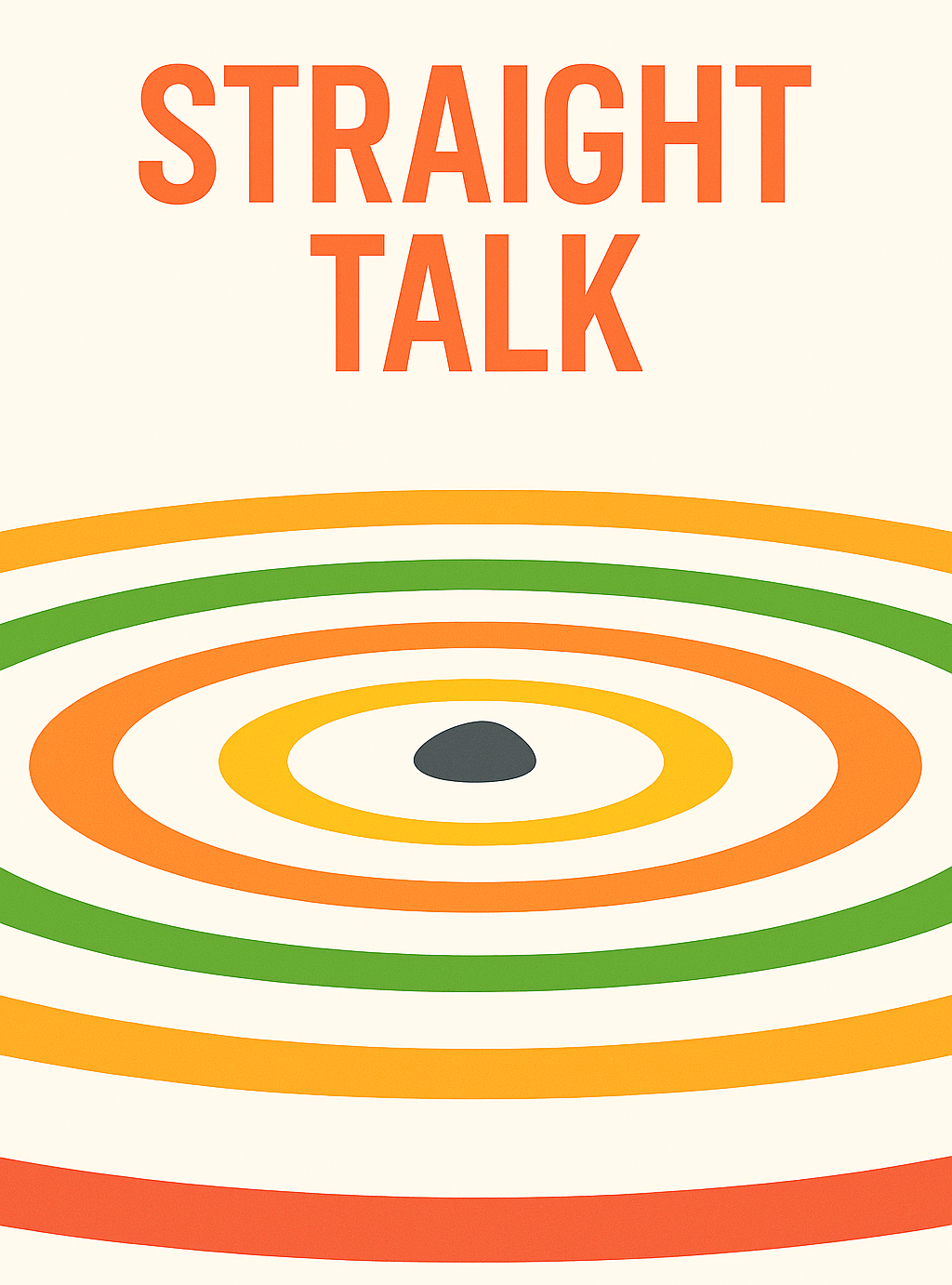
“Straight Talk.”
I remember thinking at the time: Wow, that’s quite a powerful title.
I eagerly opened the email, and the message itself was just as powerful — and somehow quietly confident.
I don’t remember the exact words, but the essence was clear:
“We’re in a tough situation. We need to do some things differently. We’ll pull together, and we’ll get through this.”
There was no panic. No avoidance. No grand “I won’t let us fail” rhetoric. Just: We’re going to get through this.
There was quiet confidence — and a genuine we’re in this together spirit.
And from that moment, I — and my peers, and my team — felt that same quiet confidence.
We knew change was needed.
For example, I moved from Engineering to HR, focusing on setting up our Internal Learning Strategy: how could we learn across the business from our own experts, rather than paying external trainers?
Many of our engineers started working on innovation projects, so we could emerge from the crisis with better products than before it began.
There were tough decisions, of course, especially in Operations. But even there, the cuts focused mainly on flexible contract staff, rather than long-term colleagues deeply rooted in the organization.
I often think back to that email — Straight Talk.
It created ‘ripples’ of skillful collaboration across the organization — rooted in dialogue, realism, and straight talk.