A Case Study in Skillful Collaboration
Executive Summary:
Leadership teams often believe they collaborate well. Yet when important strategic
decisions arise, differences in perspective, communication styles, and unspoken
tensions can quickly surface, or maybe worse, stay hidden.
This case study describes a one-day team development session with the
leadership team of a successful AI solutions business. While the company was
performing well commercially, the team was experiencing friction around strategic
decisions and future service offerings.
Using the Skillful Collaboration Team Assessment, the team explored how
effectively they collaborate across four areas: conversations, decisions, meetings,
and peer coaching. The results revealed a significant gap in how team members
perceived the quality of collaboration, particularly in decision-making and
commitment after decisions were made.
During the workshop, the team practiced several approaches designed to
strengthen collaboration and decision quality, including:
structured conversations about different aspects of decision-making
debate exercises to explore constructive disagreement
the Dialogic Actions Model (Move, Follow, Oppose, Bystand) to improve
conversational balance
emotional agility practices to increase awareness of emotions in team
interactions
The session helped the team recognise an important pattern: conversations were
dominated by advocacy (sharing opinions) while curiosity, explicit challenging, and
reflective inquiry were less present.
By the end of the workshop, the team agreed to intentionally practice skillful
conversations in meetings and decision-making, increasing inquiry, expressing
disagreement more openly, and building stronger commitment to decisions.
For HR and L&D leaders, this case illustrates how facilitated dialogue, structured
conversational models, and emotional awareness practices can help (leadership)
teams improve decision quality, psychological safety, and collaboration.
Client Context: A Leadership Team Case Study
Recently I was at an offsite meeting with a leadership team from a small but
successful business. The team consists of three people, one of whom is the
company owner. The company is part of a global franchise and provides AI process
solutions to medium and large organisations.
The business is performing well in its core market. However, the leadership team is
now considering broadening its offering with complementary AI services. As often
happens when strategy evolves, this shift was creating some tensions within the
team.
They invited me to facilitate a day together to explore how skillfully they were
collaborating, with the aim of understanding the tensions and making some
agreements about how they wanted to work together going forward.
Individual Perceptions of Team Collaboration
Before the workshop, each member of the team completed the Skillful
Collaboration Team Assessment and received an individual report.
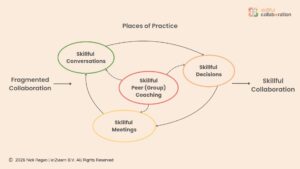
The assessment looks at four areas of collaboration:
Conversations
Decisions
Meetings
Peer and Peer Group Coaching
Each area contains five questions, scored from 1 (poor) –5 (excellent).
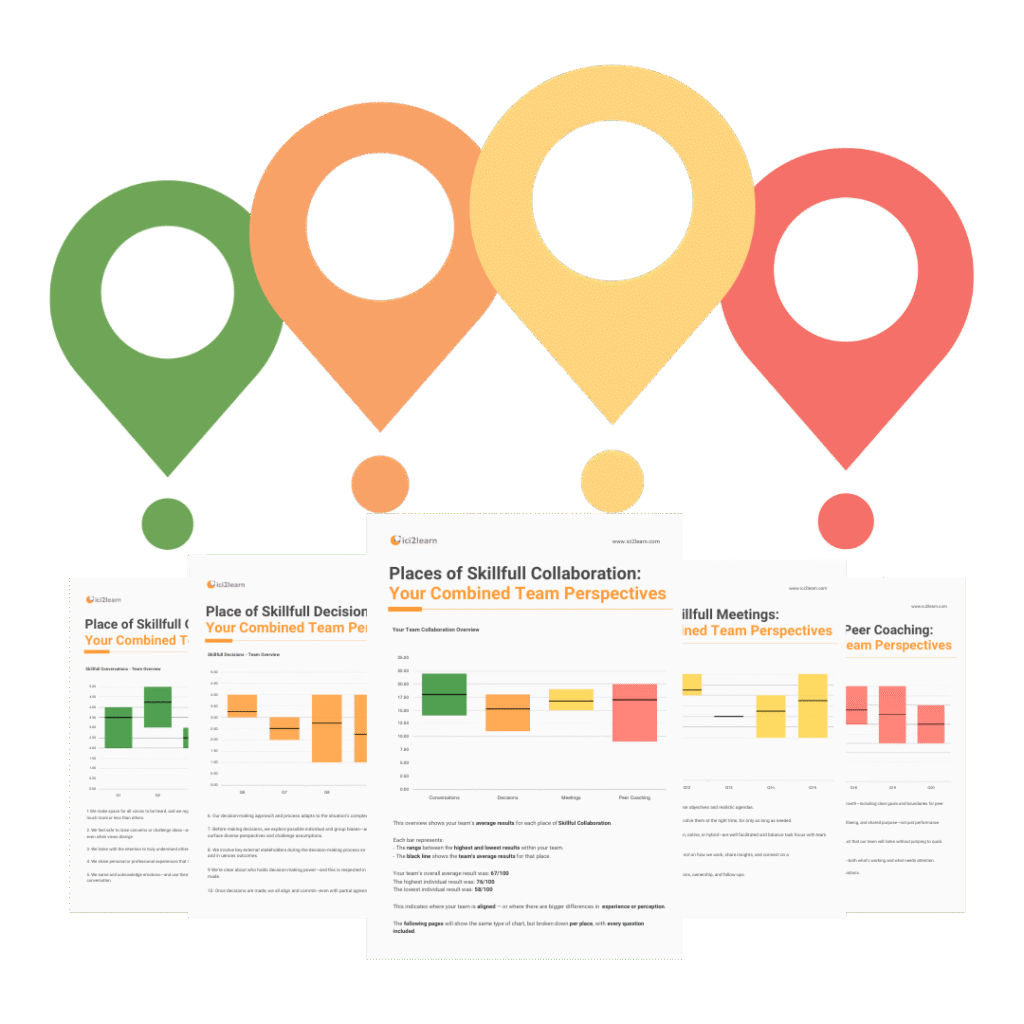
The team’s individual assessments are shown on the graphs below
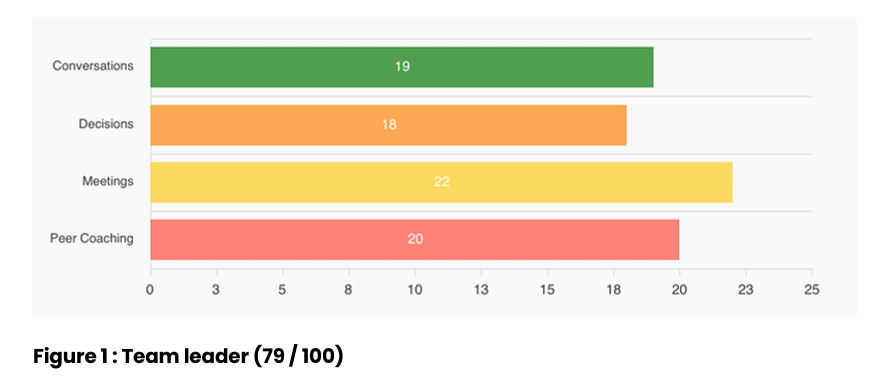
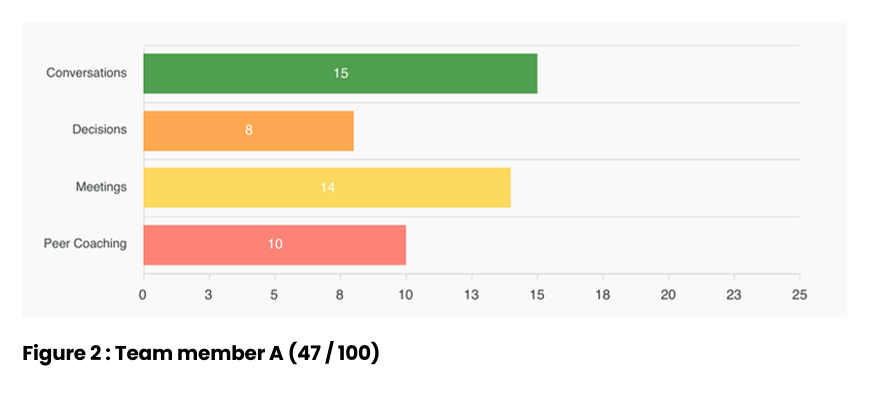
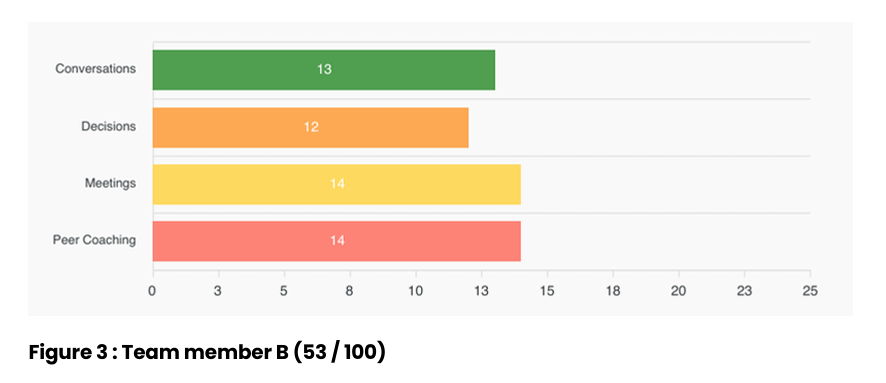
The spread of perceptions was not surprising to me. In many teams, leaders often
score collaboration more positively than their team members. This pattern has
appeared in the majority of the Skillful Collaboration assessments I have facilitated.
With this range of perceptions, I expected the workshop to be an emotional and
revealing day.
Checking In With Skills
I like to start workshops with a check-in question that connects to the theme of the
day.
For this session I asked: What is your favourite skill? And how did you develop it?
This type of question is personal and positive. It also reinforces a simple idea:
Skills develop through practice.
The team shared some wonderful favourite skills:
engaging with people
building relationships
business agility and adaptability
Hearing this, I thought and felt: It’s not surprising that this is a successful business.
Choosing Where to Start
I handed out the Team Assessment Reports and asked the team to review them for
a few minutes.
I guided them to the overview page that shows the below teams results. Each bar
represents the range (highest and lowest score) per ‘area’ of collaboration and the
black lines show the teams average scores.
Then, I asked the team a simple question:
Which area of collaboration would you like to explore together first?
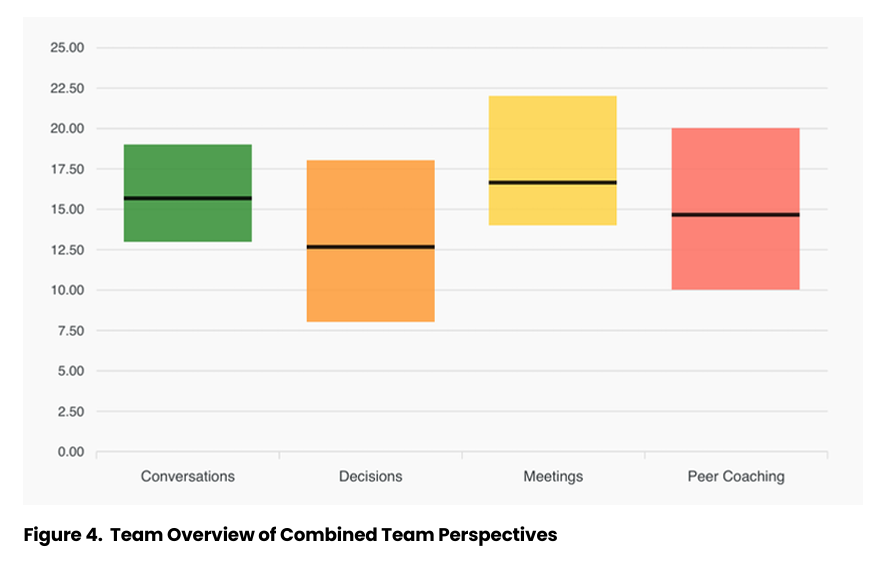
The section with the lowest average score and the largest spread of perceptions
was Decision Making.
After looking together at the the numbers / data in the report, one of the team
members shared a recent example: a decision they had ‘made’ about the design of
the company website and Marketing material for their new offering.
The team leader had made the final decision, which was within her authority.
However, the other two team members felt their advice had not really been taken
into account.
Later, when the team members were expected / requested to share the marketing
material with clients, they found themselves reluctant to do so.
The leader felt confused: “I thought we had discussed it and made the decision.”
But the team members had disagreed, felt unheard and still couldn’t commit to this
direction.
There was clear tension in the room.
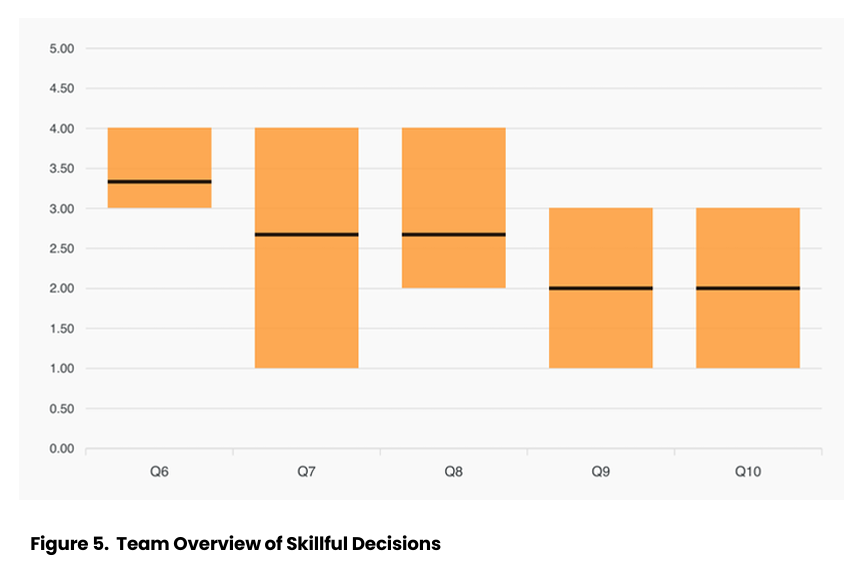
And the assessment data reflected this dynamic: low scores for Q9 and Q10 around
‘respecting’ decision authority and commitment to decisions even with partial
agreement.
Instead of trying to “solve the problem” immediately, we focused on reflection.
On a flip chart the team captured their thoughts on two questions:
What are we proud of?
Let’s keep sharing our ideas
What would we like to improve?
more active listening
find a way to truly commit to decisions
Their answers were simple and honest.
We Love Conversations
Then the team chose to explore Skillful Conversations.
Given their favourite skills included engaging with people and building relationships,
it was not surprising that this team ‘loves’ conversation.
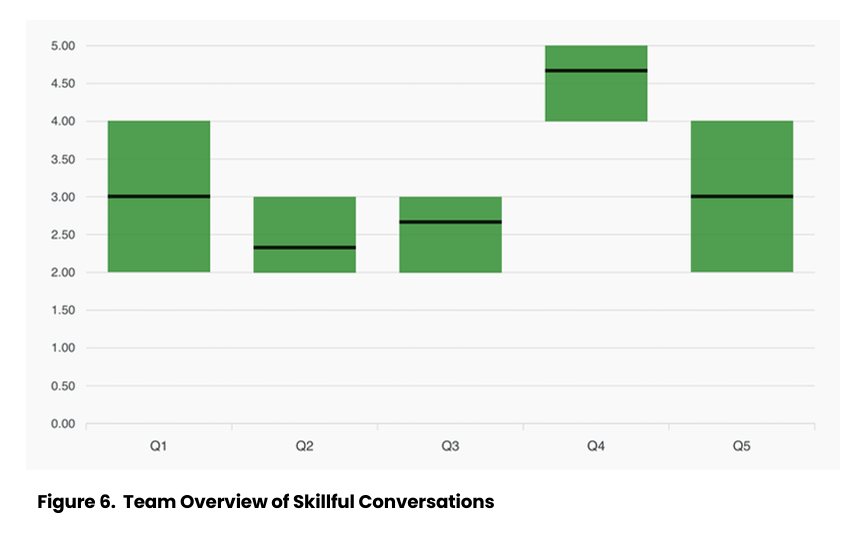
Their assessment scores clearly show that, in conversations the team share
professional and personal experiences openly. See the graph for Q4 below.
This question is shines a light on the openness and transparency of the team. I
could sense the ‘care’ and ‘connection’ they have for each other.
However, using the data the team also noticed something important.
Their conversations often sounded like this:
Team member A: “Here’s my opinion.”
Team member B: “OK, here’s my opinion.”
Team leader: “That’s interesting… here’s my opinion.”
And the pattern continues until eventually:
Team leader, “Well, we’re out of time. Let’s come back to this next time.”
I actually recognize this pattern with many teams I work with. People openly share
opinions and ideas, which can be a strength, but they don’t actually disagree
explicitly. This can be seen with the low score of Q2 on the conversations graph.
In fact the team realised that by working together this way, they were often
avoiding the discomfort of conflict.
Let’s Debate
To explore this dynamic further we ran a debate, with two sides formed to debate
for and against a motion. The motion we chose was:
“This house believes that teams perform best when peace and harmony are
preserved.”
I joined one of the sides to make up the numbers. Then the side ‘for the motion’
started the debate:
harmony protects relationships
conflict wastes energy
disagreements can become personal etc.
Followed by those against the motion and their arguements:
without disagreement we risk groupthink
important perspectives remain hidden
strong teams need healthy conflict etc.
Then I asked the two debate teams to switch sides, physically and mentally. This
created a powerful moment of learning. Arguing the opposite position forced the
team to step into each other’s perspectives. This is difficult and takes some
practicing!
The conclusion? Even if it feels uncomfortable, the team agreed they need more
disagreement, not less. But disagreement alone isn’t enough. It needs to happen
skillfully which means incorporating curiosity.
Walking the Talk of Skillful Conversations
To explore this further, I introduced the concept of Skillful Conversations, which I
learned from Peter Garrett and Jane Ball at the Academy of Professional Dialogue.
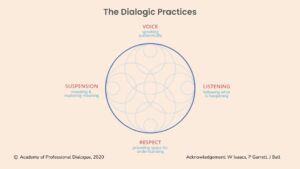
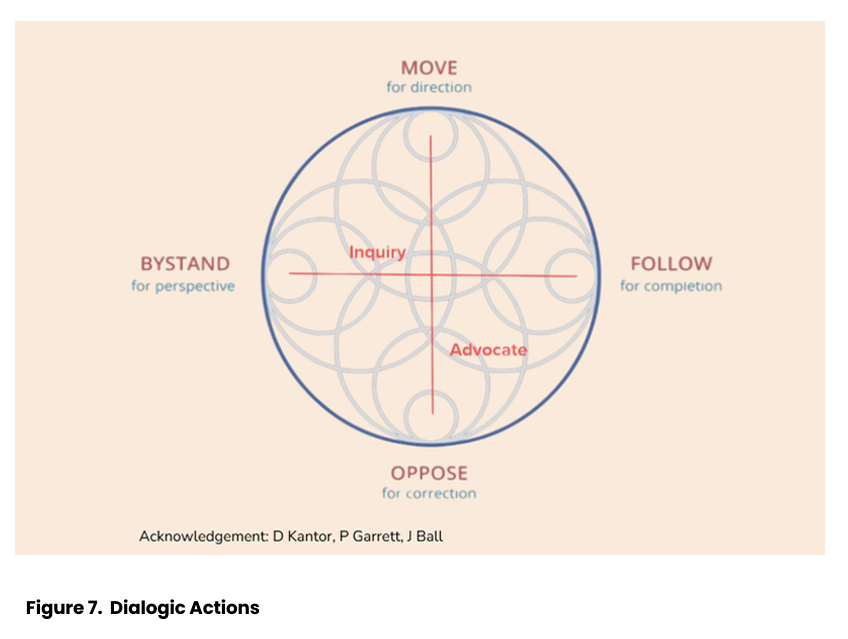
The idea is simple: when teams / people speak, they are voicing one of four things.
Move – offering an idea
Follow – supporting an idea
Oppose – challenging an idea
Bystand – asking questions or reflecting on the conversation
These four ‘Dialogic Actions’ are a refinement of the ‘Four Player Model’ developed
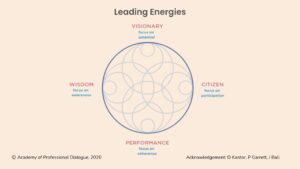
by David Kantor.
To make this visible, we put tape on the floor for the lines of Inquiry and Advocacy
and placed four sheets of paper in the correct place labelled:
MOVE – FOLLOW – OPPOSE – BYSTAND
hen the team had a simple task:
Decide what restaurant they would go to together on Saturday evening?
Each time someone spoke, they stepped onto the ‘Dialogic Action’ they were taking.
MOVE: “Let’s go for Italian.”
OPPOSE: “I had Italian yesterday.”
MOVE: “I know a great Spanish restaurant.”
MOVE: “I like Thai food.”
FOLLOW: “Yes, that sounds good.”
MOVE: “I prefer Indian food.”
BYSTAND: “What other options do we have?”
The exercise was playful, but revealing. The movement around the floor was like
visualizing the conversational dynamics.
The dominant pattern in the team quickly became clear:
Lots of Moves. Lots of ideas, lots of advocacy, but very little inquiry or curiosity.
And no one felt comfortable saying ‘No’.
Again, this pattern re-emerged from the website / marketing brochure ‘issue’.
When disagreement isn’t expressed directly, people simply introduce another idea.
The result? Many ideas… but little clarity or commitment.
Eventually the team did make the agreement of trying a new French restaurant that
had recently opened. Tres Bien!
And they had learnt a model that they could use to lean into Oppose, Bystand and
Follow when having conversations and making decisions.
Emotional Agility in Conversations
After exploring conversational patterns, we turned to the underlying emotional
dimension of conversations to explore:
What is actually holding back this Leadership team from saying ‘No’?
What is guiding them to ‘advocate’ their opinions, rather than inquire with
curiosity about each others ideas?
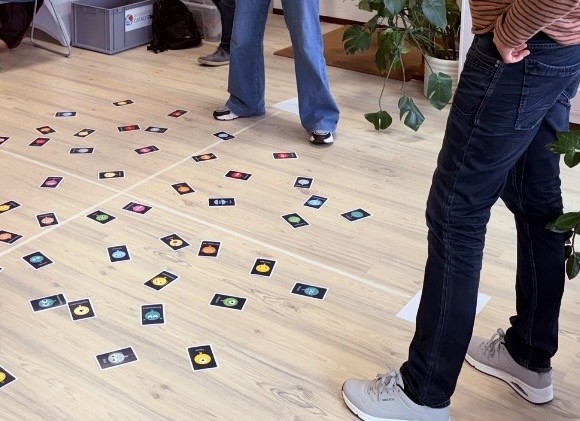
I spread a deck of emotion cards on the floor and asked the team to choose
emotions they had experienced during the morning discussions.
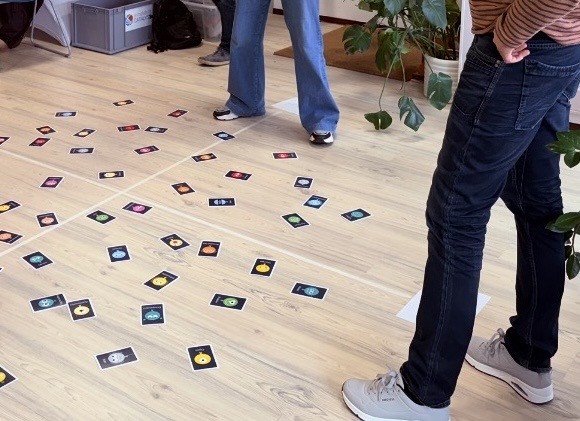
Figure 8. Emotional Agility in Conversations
The team carefully observed the cards, ‘Wow what lot of emtions’! and each
selected a mixture:
Positive emotions: grateful, excited, caring
More difficult emotions: uncomfortable, nervous, frustrated
Interestingly, nobody chose anger. This too is often not allowed to be expressed in
teams. And yet we had clearly felt tension and some underlying anger earlier in the
day.
I chose the emtion card ‘Moved’ and talked about a shift that seemed to be taking
place as the team ‘struggled together’, to find and connect with each other. There
was vulnerability in the room and this opened a powerful conversation about
emotional agility, a concept developed by Susan David.
Emotional agility means becoming curious about our emotions and learning to
name them. When we can name what we feel, it becomes information / data that
can guide our responses and our conversations.
We also practiced a simple self regulation technique called the physiological sigh
(two inhales followed by a long exhale) which helps quickly reduce stress in our
bodies during emotionally charged moments.
The team began to see that emotions are not separate from collaboration.
They are an integral part of every conversation, decision and meeting.
What Changed?
At the end of the day the team revisited their assessment results and asked:
What do we want to practice together going forward?
This conversation already felt different. There was more curiosity and more inquiry.
Instead of immediately advocating ideas, one team member asked the leader:
“What are your thoughts on the most important area to focus on?”
Together they agreed on one clear practice:
Use the Skillful Conversations model when making decisions and in meetings.
They committed to intentionally practicing these conversational skills several times
each week. And they would start straight away with re-visiting their direction for the
website / marketing brochure direction.
Final Reflection
As we closed the session, I returned to the morning check-in.
A skill is simply something we practice.
If we want to develop a skill, we need to practice.
This team already excels at engaging with people, building relationships and
business agility / adaptability. The next step in their development is learning how to
bring skillful disagreement, emotional agility and more curiosity into their
conversations, decisions and meetings.
And like any skill, it will improve with practice
Acknowledgements:
The ‘Dialogic Actions’ model which is incorporated in ‘Skillful Conversation’ is
acknowledged to Peter Garrett and Jane Ball (Academy of Professional Dialogue).
The Emotional Agility concept is acknowledged to Susan David.