I’ve been ‘listening and talking’ for over 50 years.
But I’ve only been learning and practising ‘dialogue’ for 2 years.
I believe that dialogue is the most creative and important skill that I’ve ever learnt—and probably will ever learn.
Here’s why:
I work as a leadership coach and team coach in corporate environments, and everything I do there is about dialogue. Dialogue enables a coach and coachee to build a resonant relationship through which the coaching work flows. It also enables teams to truly collaborate (work together); the skills of dialogue accelerate team effectiveness and high performance.
Dialogue between people enables trust, on which our business relationships grow. It allows us to both advocate our position and be curious about others’ perspectives. When in dialogue, we feel heard. How often do you feel truly heard?
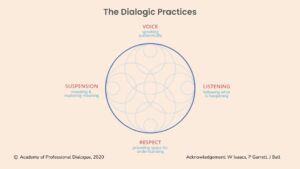
Dialogue also enhances psychological safety. It is a skill set of knowing how—and feeling when—to speak up with your ideas and worries; knowing how and when to listen and commit; knowing how and when to respectfully disagree to explore other paths; and knowing how and when to reflect on the conversational and power dynamics that are occurring.
I often see articles about the value of trust and psychological safety in teams and organisations, but I rarely see the line drawn from these ‘mystical characteristics’ to the skill set of dialogue.
Maybe it’s because dialogue, too, is seen as a mystical characteristic. At least, that’s what I’ve found. When I initially talk with clients about dialogue, they invariably say, “Oh, we already do dialogue!”
Of course, there is the misconception that they, too, have been ‘listening and talking’ for 30, 40, 50, or even 60 years…
But I’ve worked with many teams in many organisations in my 30-year career, and I’ve witnessed very few who actually do dialogue.
To understand this, let’s go to the origins of the word ‘dialogue.’
The term comes from the Greek word dialogos (διάλογος):
- dia (διά) → “through” or “across”
- logos (λόγος) → “word,” “speech,” “reason,” or “meaning”
So, dialogos literally means “meaning flowing through words.”
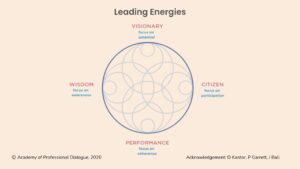
A couple of years ago, I learnt dialogue to mean ‘developing and owning ideas together.’ I learnt this from my teachers and mentors—what I call ‘dialogue Jedi masters’—Peter Garrett and Jane Ball at the Academy of Professional Dialogue Practitioners.
I found, and still find, this an incredibly exciting notion: developing and owning ideas together.
Not only can this skill set enable trust and enhance psychological safety, as previously mentioned, but it also opens up endless possibilities for creativity.
Creativity is simply ‘generating something new and meaningful or valuable.’ So dialogue in and across teams enables creativity—and we all know that creativity is the gateway to innovation.
When written like this, it seems like a relatively simple process, at least in my head:
Learning to dialogue
Builds trust
Enhances psychological safety
Develops effectiveness and high performance
Enables creativity and innovation
It seems simple, but learning dialogue isn’t. The skill set is complex and developmental. It takes practice, experimentation, and reflection—again and again. Two steps forward, one step back. Keep trying. Keep learning.
It can be painful. Our inner dialogue is sometimes savage…
“What did you just say, you IDIOT!!” (on repeat…)
But it can also be joyful. We talk, listen, and think emergently with others, and we learn and develop so much as ideas and creativity flow. We arrive with past thoughts, and we leave with new thinking.
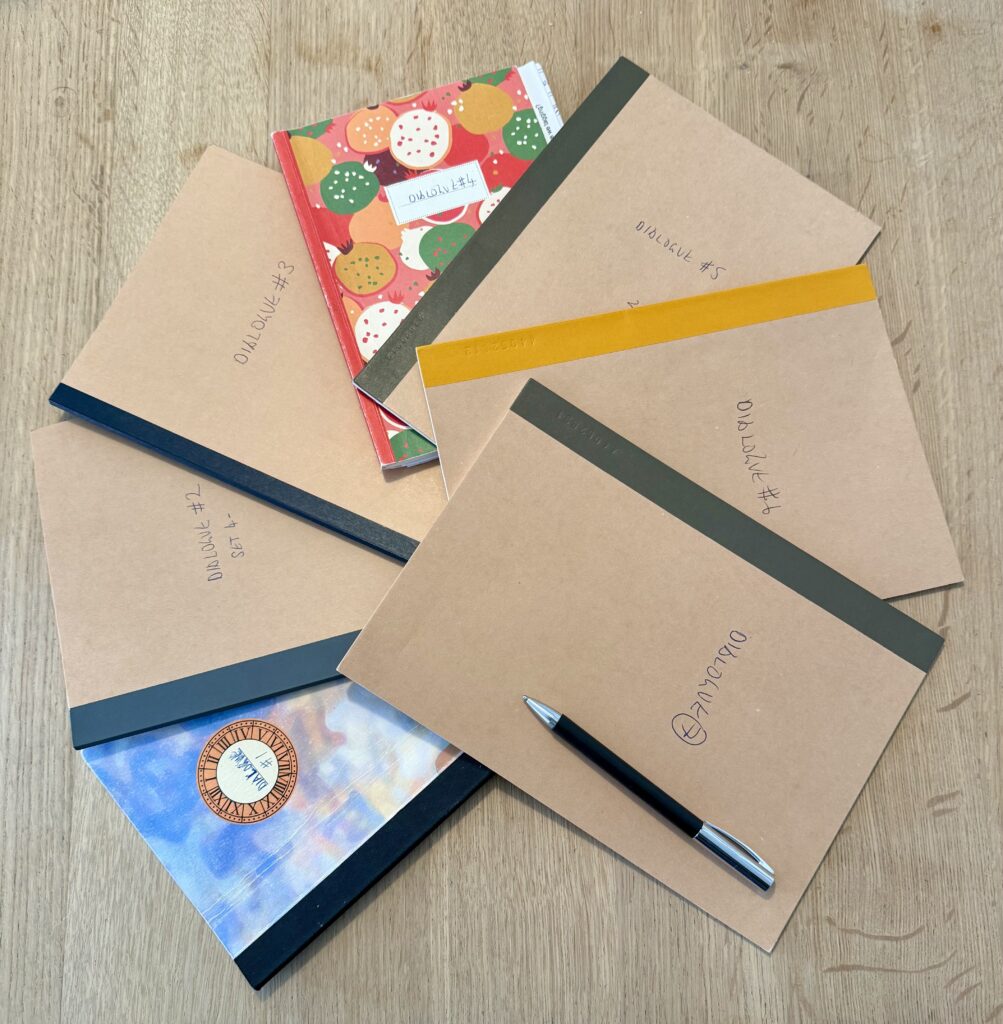
My path to learning dialogue has been long—and is ongoing. The seven notebooks in the image are my reflections since I signed up for the six-month Professional Dialogue Practitioners diploma with Peter and Jane in early 2024.
Since then, I’ve coached many teams and leaders to learn the skills of dialogue. I also continue my own practice as one of the hosts of the Academy’s monthly dialogue—a 90-minute session where we choose a topic and practise together.
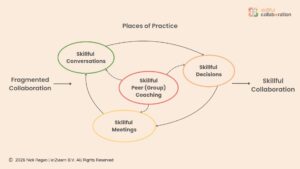
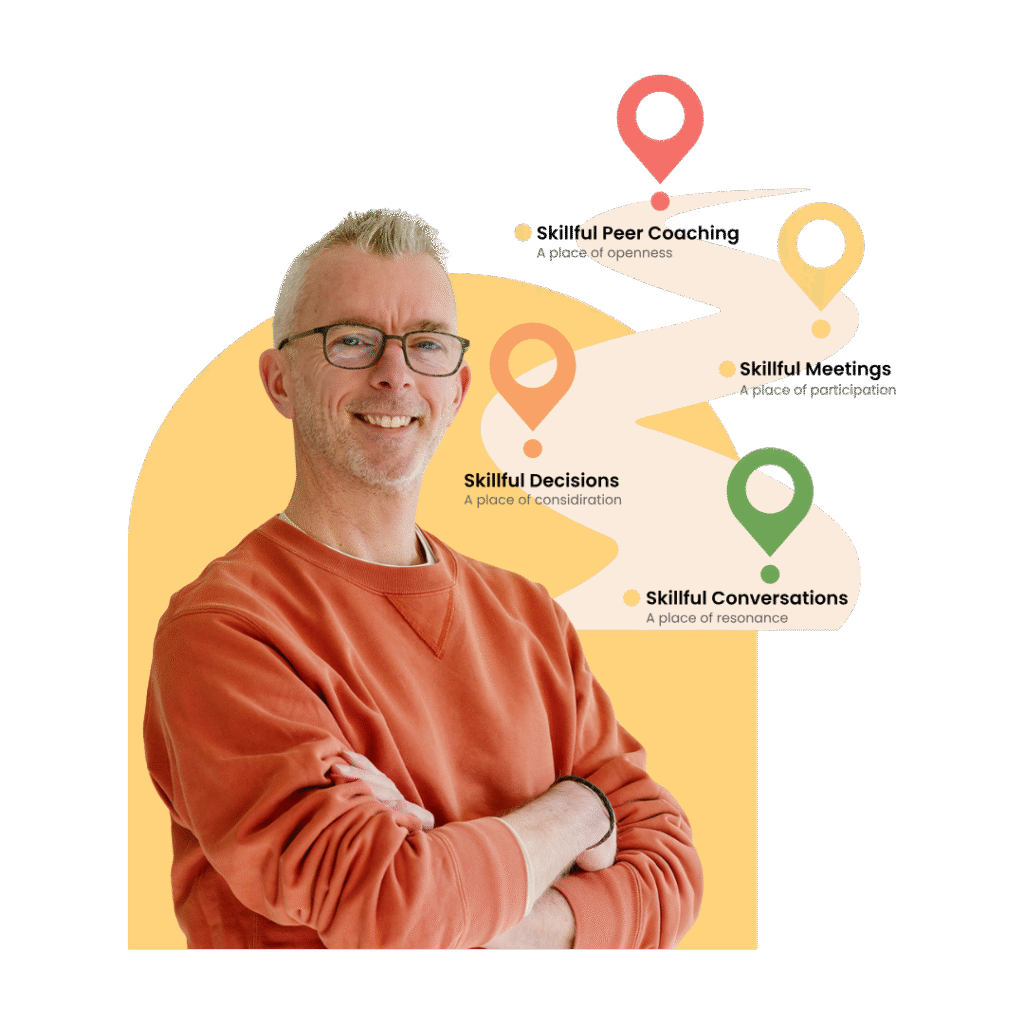
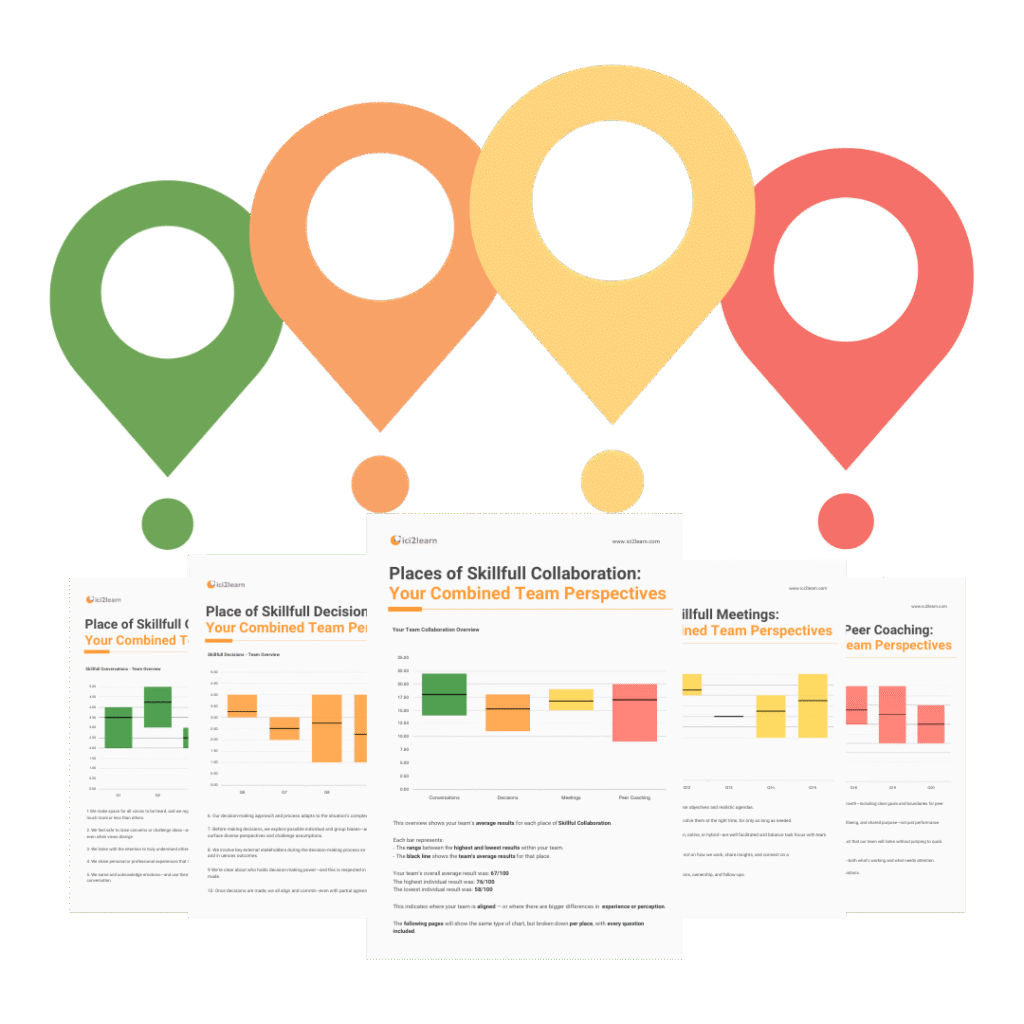
And perhaps most developmental for me—and for others—is that over the last 18 months, I’ve created the concept of Skillful Collaboration. The aim is to help teams everywhere grow the human skills of collaboration.
And the fundamental input for these human skills isn’t trust or psychological safety…
It’s dialogue.