Helping a Leadership Team Move Beyond Advocacy and Build Commitment
Why this Matters
Key insight from a participant:
“He thought we had made decisions together, but in reality, some of us had simply stopped engaging in the process as we didn’t feel heard.”
The team’s challenge was not a lack of innovative ideas and energy. The challenge was learning how to balance advocacy with inquiry so that decisions could be strengthened by others perspectives and ultimately supported by everyone involved.
Challenge
A successful AI solutions business was exploring opportunities to expand its service offering. While the business was performing well commercially, tensions were emerging within the leadership team around strategic marketing decisions and future direction.
The team wanted to better understand their team / power dynamics and develop more effective ways of collaborating together.
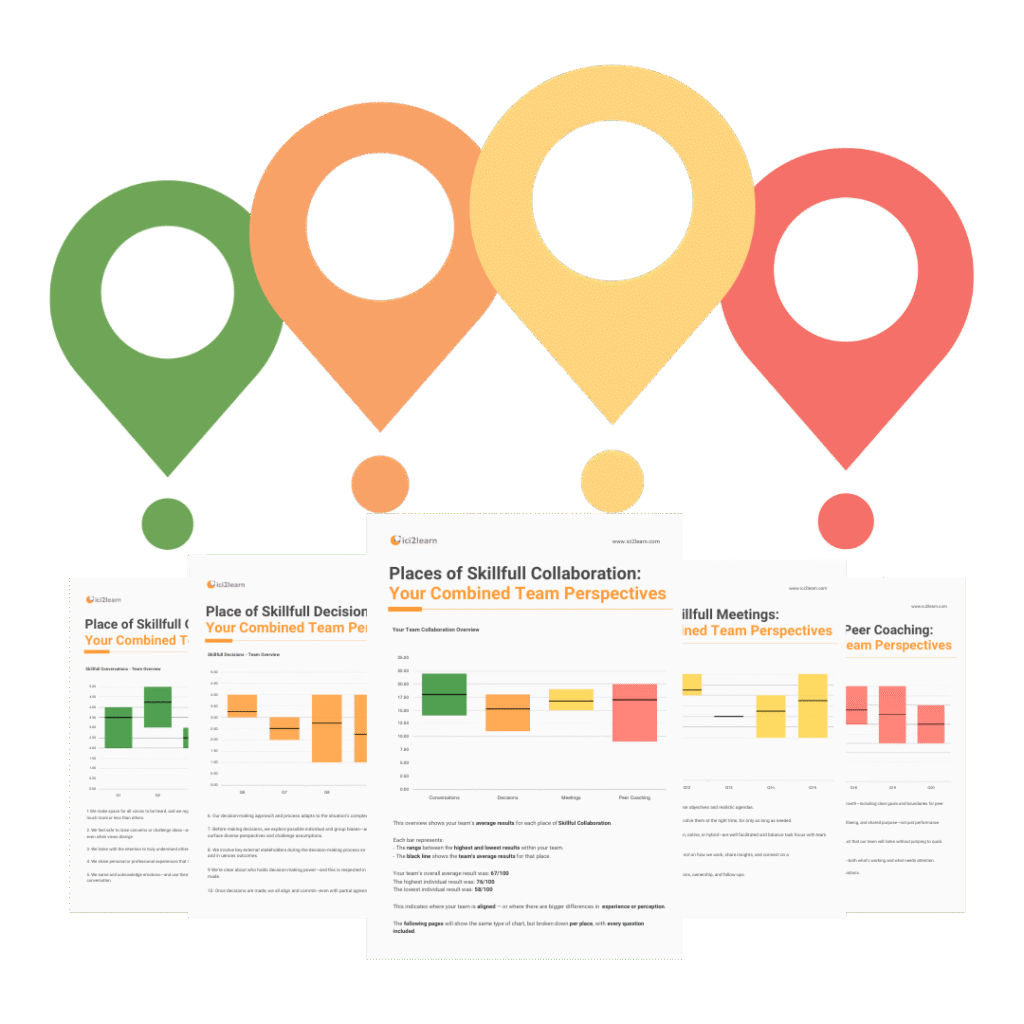
Prior to the workshop, each team member completed the Skillful Collaboration Team Assessment. The results revealed significant differences in how team members perceived the quality of collaboration, particularly in decision-making, in terms of clarity of who holds decision making rights and alignment and commitment to decisions.
Approach
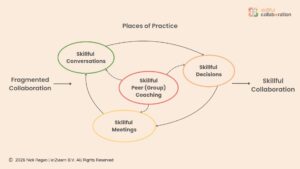
We began by reviewing the results of the Skillful Collaboration Team Assessment, which explores collaboration across four areas: Conversations, Decisions, Meetings and Peer Coaching. The lowest average scores and the largest gap in perceptions appeared within decision-making.
A recent example quickly surfaced. The team leader had made a final decision regarding marketing materials for a new service offering. While the decision was within his authority, the other team members felt their perspectives had not been fully considered. As a result, they struggled to commit to the direction and were reluctant to actively support it.
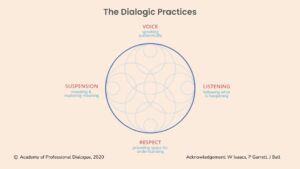
Throughout the workshop we explored several practices designed to strengthen decision quality, including structured conversations about decision-making, debate exercises, Skillful Conversations and the Dialogic Actions model (Move, Follow, Oppose, Bystand).
Several activities proved particularly powerful.
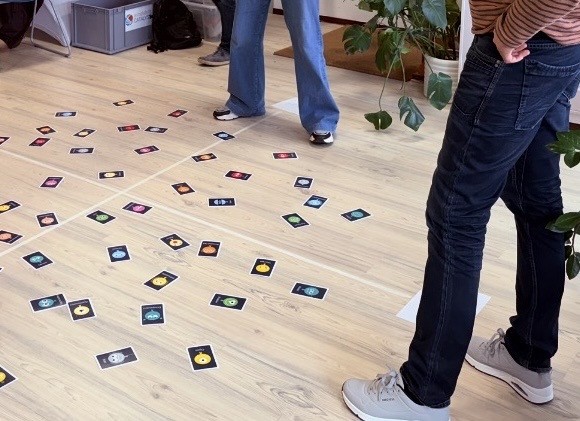
The first involved physically practising the Dialogic Actions model. As the team worked through a simple decision together of choosing the restaurant they would visit together that evening. It quickly became visible that conversations contained plenty of advocacy and ideas, but relatively little inquiry, challenge and curiosity. Team members often introduced new ideas rather than directly disagreeing with existing ones.
To further explore this dynamic, the team participated in a structured debate about whether teams perform best when peace and harmony are preserved. The exercise highlighted the value of constructive disagreement and multiple perspectives in strengthening decisions.
Finally an activity to explore Emotional Agility to help the team recognise and work more skillfully with the emotions present during difficult conversations and decisions.
Reflections
The workshop highlighted a recurring pattern. Team members were comfortable sharing opinions and perspectives, but less comfortable explicitly challenging one another’s thinking.
As a result, important disagreements often remained hidden, but in plain sight. The leader ‘correctly’ assumed that he had the power to decide, but the team members didn’t feel heard and voice their agreement / commit to the decided direction.
As one team member put it, ‘’The Team leader chose his direction, but weeks or months later my team were still dragging our heels to communicate it to the market.”
Through the Skillful Conversations exercises, the team experienced that disagreement does not automatically damage relationships. Instead, constructive challenge and inquiry about another’s idea can strengthen understanding, decision quality and commitment.
The Emotional Agility activities also helped the team recognise that emotions are not separate from collaboration. Naming and being curious about emotions, rather than avoiding them, can provide valuable information during the decision-making process.
Outcomes
The team left the workshop with a clearer understanding of how their conversational habits were influencing decision quality.
They recognised the need to balance advocacy with greater inquiry, curiosity and constructive challenge. They also agreed to intentionally practise Skillful Conversations and naming their emotions during meetings and decision-making discussions.
By making their disagreement more visible and increasing curiosity about different perspectives, the team identified opportunities to improve both commitment to decisions and the overall quality of strategic discussions.
What made the difference?
Rather than focusing on decision-making frameworks, the workshop focused on how decisions are actually created through high quality conversations.
By making conversational patterns visible, practising inquiry and constructive disagreement and increasing emotional awareness, the team developed greater insight into the human dynamics that influence decision quality.
This case illustrates a core principle of Skillful Collaboration: better decisions are often less about finding better answers and more about creating better conversations.
Testimonials
Thank you again for the workshop. It was very insightful… and I love your calm way of being, you have a very nice presence!
Learning to both name and regulate my emotions is a great exercise for me… in handling conversations both a work and at home.
It was a wonderful day, I’m really looking forward to seeing how our collaboration evolves in the team.
I loved the workshop, so well designed and really impactful for us.