Helping a Team Create Consistent Ways of Connecting with Colleagues and Stakeholders
Why this Matters
Key insight from the programme:
“The same behaviours that help us collaborate effectively inside the team also help us build stronger relationships with our stakeholders.”
Most teams have unwritten rules about how people work together. The challenge is that everyone may be working from a different set of assumptions. High-performing teams make these expectations explicit, agree how they want to work together and then consistently practise those behaviours.
Some teams invest time defining how they want to work together, but far fewer teams actively practise those behaviours and apply them beyond the team itself.
This team not only agreed their team norms, they actively experimented with them in their day-to-day work. They practiced together and discovered that team norms are most powerful when they become more than an internal agreement, they become a shared way of partnering with the wider organisation.
Challenge
A specialist team within a multinational organisation wanted to strengthen collaboration, create a stronger sense of belonging and develop more effective ways of working together.
The team had recently welcomed a new team leader and saw an opportunity to reflect on both what they wanted to achieve together and how they wanted to work together. They recognised that success depended not only on collaboration within the team, but also on the quality of their relationships with colleagues and stakeholders across the wider organisation.
Approach
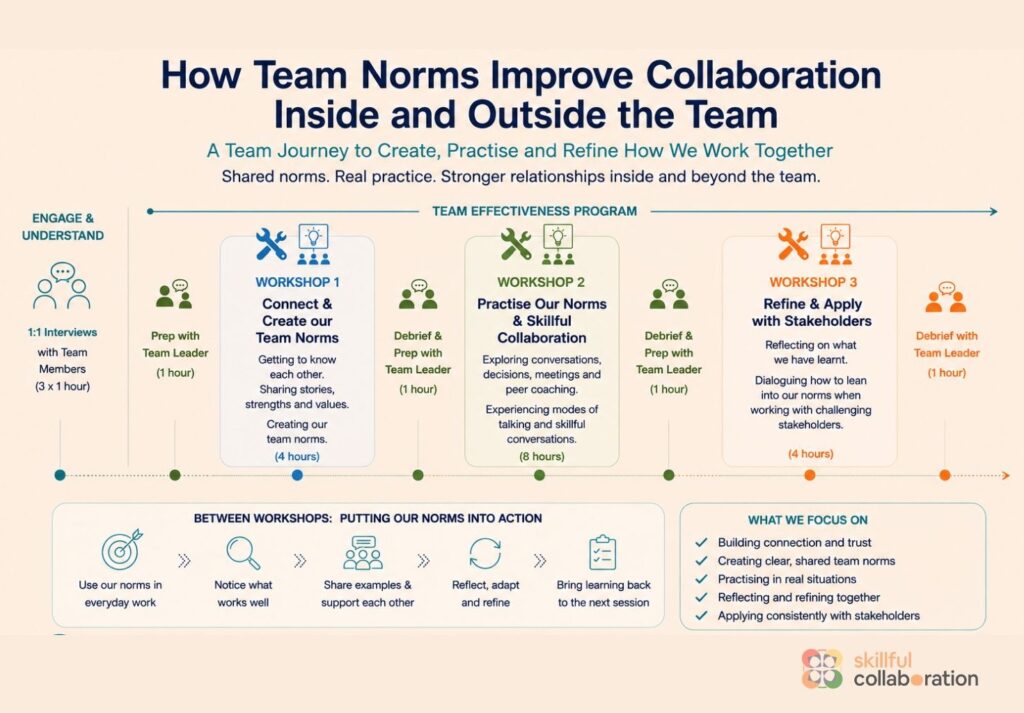
The journey began by focusing on connection. Through personal storytelling, team members shared important experiences from their lives, their values, strengths and aspirations. The intention was simple: before improving collaboration, the team wanted to deepen their sense of belonging and strengthen relationships.
Building on this foundation, the team explored its strengths, areas for improvement and shared purpose. Together they then developed a set of team norms that captured how they wanted to work together. Rather than treating the norms as a one-time exercise, the team agreed to actively practise them between workshops.
During the following weeks, team members experimented with the norms in their everyday interactions, reflecting on what worked well and where they encountered challenges. The norms became a living part of the team’s development rather than a poster on the wall.
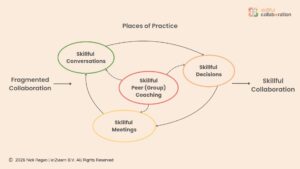
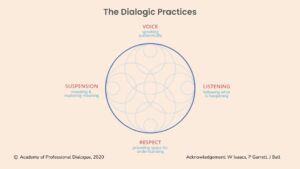
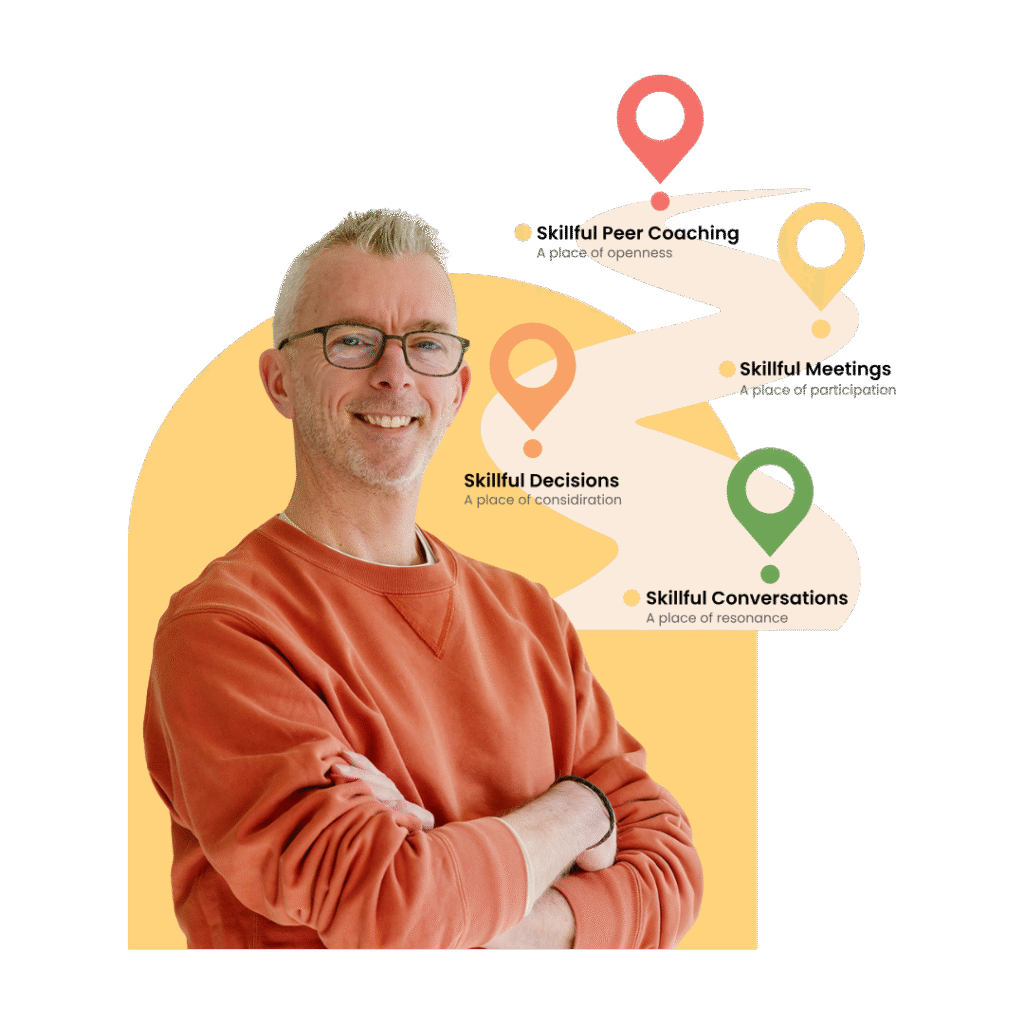
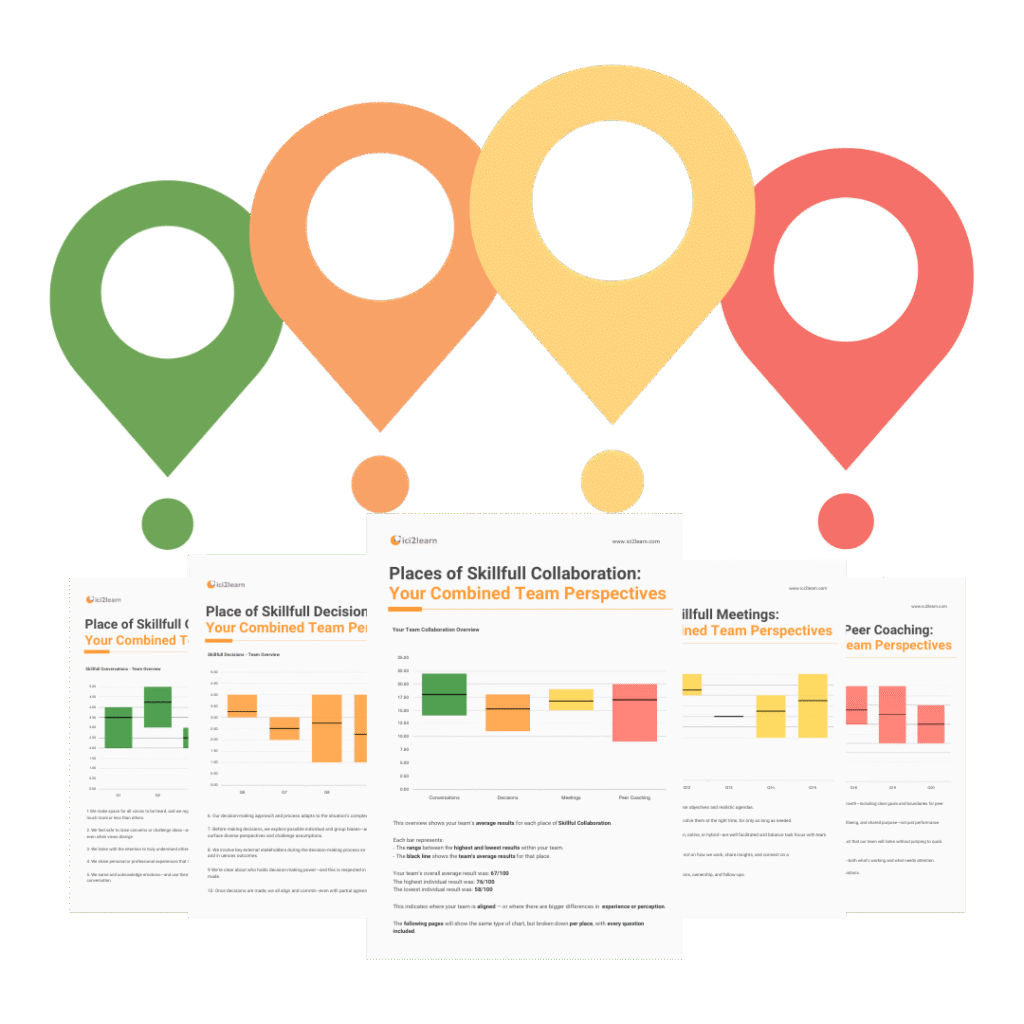
Alongside this work, the team explored Skillful Collaboration practices including the 7 Modes of Talking and Thinking Together, Skillful Conversations, Dialogic Actions, Peer Coaching and Dialogic Decision Making. These practices provided practical ways to bring the team norms to life.
In the final workshop, the team reflected on their experiences and engaged in a dialogue about how they could lean into the team norms when working with challenging stakeholders. This shifted the conversation from “How do we work together?” to “How do we consistently show up in all of our relationships?”
Reflections
One of the most important insights was that team norms become meaningful only when they are practised. The team discovered that collaboration is not a fixed set of rules but an ongoing practice of reflection, experimentation and learning. As they applied the norms between workshops, team members became more aware of how their behaviours influenced both internal team relationships and external stakeholder partnerships.
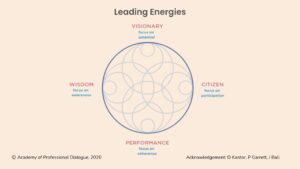
The final dialogue revealed another important insight. The team did not need one set of behaviours for colleagues and another for stakeholders. The same practices of openness, curiosity, listening, perspective-taking and respectful challenge were valuable in both contexts.
Outcomes
The team developed stronger connections and a greater sense of belonging, creating a solid foundation for future collaboration. They co-created a set of team norms that reflected how openly they wanted to work together and used those norms as a practical guide for everyday interactions.
By experimenting with the norms between workshops and refining them through ongoing dialogue, the team created greater ownership and commitment than would have been achieved through a one-off agreement.
Most importantly, the team began to use the norms not only within the team but also as a guide for building stronger partnerships with stakeholders across the wider organisation.
What Made the Difference?
The programme did not treat team norms as a one off check list. Instead, the team moved through a cycle of creation, commitment, reflection, practice and sense making.
By first building stronger relationships, then co-creating norms, and then experimenting with those norms in real situations, the team transformed a simple set of agreements into a practical way of working.
This case illustrates a core principle of Skillful Collaboration:
The most effective team norms are not written on a poster. They are practised consistently in every relationship, both inside and outside the team.
Testimonials:
Thank you again for your guidance and support during our sessions. We truly appreciate your input and will continue to build on our team norms during our everyday interactions and upcoming team meetings.