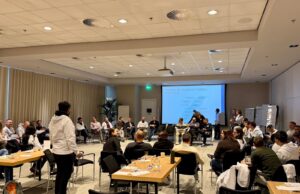

A few weeks ago, I was in a room facilitating a brilliant team.
They work in a highly successful and profitable part of their organization, contributing to double-digit year-on-year growth. The team leader and members are motivated, diverse, experts in their fields, and genuinely capable individuals. Life seems good in this organization, and they are seen as a source of talent by other parts of the business.
“We’re 100% committed to achieving our objectives.”
That’s the kind of sentence I hear from many team leaders there. They are focused and rightly proud of what they achieve.
I work with many teams in this organization, and most of them deliver well, in the normal sense of the word.
So, what is it that sets this particular team apart?
1. Reflecting and improving together
Even as they perform and deliver on their promises and stakeholder expectations, they also take time to reflect on how they are working together. In workshops I’ve seen them seriously — and happily — reflect on both what they are doing and how they are being together. They give similar weight to both, rather than focusing only on objectives. After the reflections, they often decide one or two actions or behaviors that they need to tweak to improve as a team.
2. Balancing share of voice
Unlike many teams where leaders dominate meetings or extroverts claim most of the airtime, this team pays attention to who is contributing and who needs to be invited in. This links to Alex Pentland’s research at MIT, which found that share of voice (nobody dominates and nobody withdraws) is a key ingredient of high-performing teams.
3. Talking about emotions
This team is really open and skilled at recognizing and naming their emotions. They talk about their emotional well-being — not as a separate add-on, but as an integral part of their meetings and conversations. Emotions are shared, accepted, and used to guide the discussion, rather than swept aside to “get back to business.”
They acknowledge emotions, recognize moments of stress, and remain curious about each other instead of being hijacked by the stress of the moment. They want to understand, acknowledge and learn, certainly not just fix.
I always find it fascinating to be in a room with such a team. The bar is already high, but they want to set it higher. It’s a collective and collaborative effort — it’s not just about the leader (though she is a brilliant role model). There is respect between members, and the focus is on finding the right answers and making the right choices together.
When teams do this, they exceed stakeholder expectations, improve their ways of working, and support each other’s well-being and learning.
That’s what I call a brilliant team.
Do you recognize any of these traits from the brilliant teams you’ve worked in?