Accountability often appears in dramatic moments.
In politics, a party loses an election and is voted out.
In sports, the team keeps losing and the manager is fired.
In business, a CEO misses the numbers again and is pushed out.
These are the big moments when someone is held to account for results or performance.
But these dramatic events are usually the culmination of many smaller moments that happened long before.
A Complex System
Take a professional soccer team as an example.
A team may be struggling to get results and many factors could be at play:
- New players arriving from overseas who are still adapting to the league
- A coach whose style of play differs from what the players are used to
- Key players suffering long-term injuries
- Media constantly comparing the current team to legendary teams of the past
- Pressure from the board to qualify for European competition or avoid relegation
- Fans demanding attacking football while the team struggles defensively
With so many interacting factors, this situation is complex.
Dave Snowden’s Cynefin Framework helps explain this. In complex environments, cause and effect cannot be predicted in advance because too many variables interact.
Changing the coach might improve results — but it might not.
Bringing in new players might help — but it might also create new challenges.
When one part of the system changes, the outcome is never entirely predictable.
Yet leaders often feel they must “do something” before the situation becomes chaotic — fans stop attending matches, media criticism intensifies, and confidence collapses.
A Similar Situation in Business
The same dynamics appear in business teams.
Imagine a product development team responsible for delivering a critical new technology to market.
At the same time:
- New engineers have recently joined from competitors and are still settling in
- The team leader has a marketing background while the team relies heavily on engineering expertise
- Several team members are working on multiple projects at once
- Senior executives are pushing for faster results
- Competitors are releasing more advanced products and gaining market share
- Customers expect innovation while also demanding lower prices
Again, this is a complex environment with many interacting variables.
So how can a team hold each other accountable in a situation like this?
Practicing Accountability
In complex teams, accountability cannot rely only on top-down consequences or dramatic decisions.
Instead, it needs to be practiced continuously within the team itself.
Here are two simple approaches that can help.
1. Start with Dialogue
The team and leader can begin with a conversation about accountability itself.
Start with a simple but powerful question:
What does accountability mean for us as a team?
The intention is not to immediately solve a problem but to learn from each other and explore different perspectives.
Teams often jump quickly to the “how” — how to measure accountability or enforce it. This is natural. When we see a problem, we want to fix it quickly.
But in complex situations, it is often valuable to spend time exploring what accountability actually means in practice.
This can include sharing stories from work, sport, or personal experiences where accountability was present — or missing.
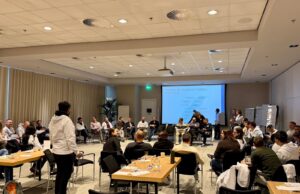
A facilitated dialogue of around 90 minutes can generate powerful insights and shared understanding.
At the end of the dialogue;
- Ask for 3 voluteers to draft a simple definition of ‘What is accountability’ for the team
- Invite each person to experiment with one behaviour / action that strengthens accountability in the coming week
2. Create Team Norms and Team Accountabilities
The next practical step is to agree on team norms and team accountabilities, especially for meetings.
Team norms describe how we want to work together.
They shape the culture of the team.
Team accountabilities describe what we can count on from each other.
They define the commitments we make in our work together.
When doing this with a team, use the input from the previous dialogue and subsequent work. i.e. what is accountability? What did we learn from the behaviours ‘experiments’ that each team member have tried since the dialogue session.
Here are two valuable questions for the team to work on.
What can I count on from you in our meetings?
This question helps generate team norms.
It invites people to express the behaviours they need from others for meetings to work well.
Examples might include:
- Come prepared
- Listen without interrupting
- Speak honestly and respectfully
- Stay focused on the topic
- Support decisions once they are made
These become shared expectations for how the team works together.
How can you hold me accountable in our meetings?
This question generates team accountabilities.
It invites people to give others permission to challenge them if they fall short.
Examples might include:
- Remind me if I talk too much
- Ask me directly if I’m unclear
- Challenge me if I avoid making a decision
- Call out if I’m not listening
- Ask me what I commit to doing next
This creates psychological permission for peer accountability within the team.
Making Accountability a Practice
These norms and accountabilities should be treated as working agreements, not fixed rules.
They should be used, referenced, and updated over time as the team learns what works best.
Although these agreements are often created for meetings, they also influence how team members interact in day-to-day work, small group discussions, and collaborations with stakeholders.
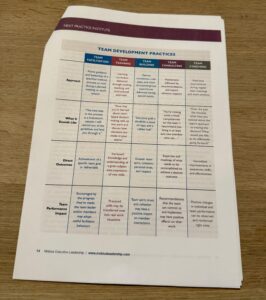
Research on team effectiveness, including the work of Richard Hackman, Ruth Wageman, and Colin Fisher, shows that clear team norms are an important enabling condition for high-performing teams.
They are not the only factor, and they do not guarantee success. But without shared norms and mutual accountability, teams have far less chance of working effectively together.
From Consequences to Practice
In many organisations, accountability is associated with blame or punishment.
But effective teams treat accountability differently.
They practice accountability together, through dialogue, shared norms, and peer commitments.
When teams develop this capability, the dramatic moments — firing the coach or replacing the leader — become far less necessary.
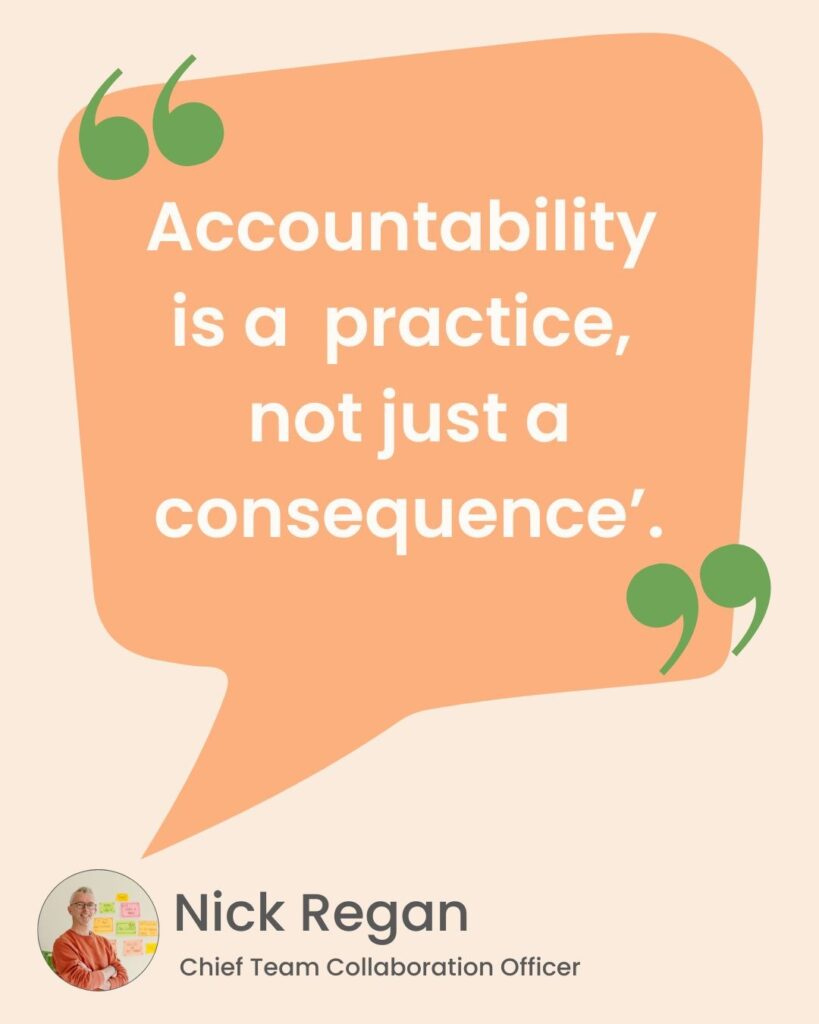
Accountability becomes not just a consequence, but a daily practice of working well together.