Collaboration simply means working together. It comes from the Latin words col, meaning together, and labore, meaning to work.
Skillful means the ability to do something well. Developing skills is essentially about practice.
In our organizations, we are constantly asked and expected to collaborate. But have we ever truly learned how to collaborate? When collaborating, many of the teams and leaders we work with fall back on habitual, automatic behaviors —especially under pressure.
Team leaders and team members fall back into individual reactions rather than aligned responses. I call this ‘Fragmented Collaboration.’ For example, I often observe people getting stuck advocating their positions; decisions getting made (or not made) without real, considered input; disengagement; energy-sapping, back-to-back meetings; and cultures of one way feedback that create closed responses and the opposite of growth.
So how can we change this? How can we help teams and leaders grow the human skills of collaboration?
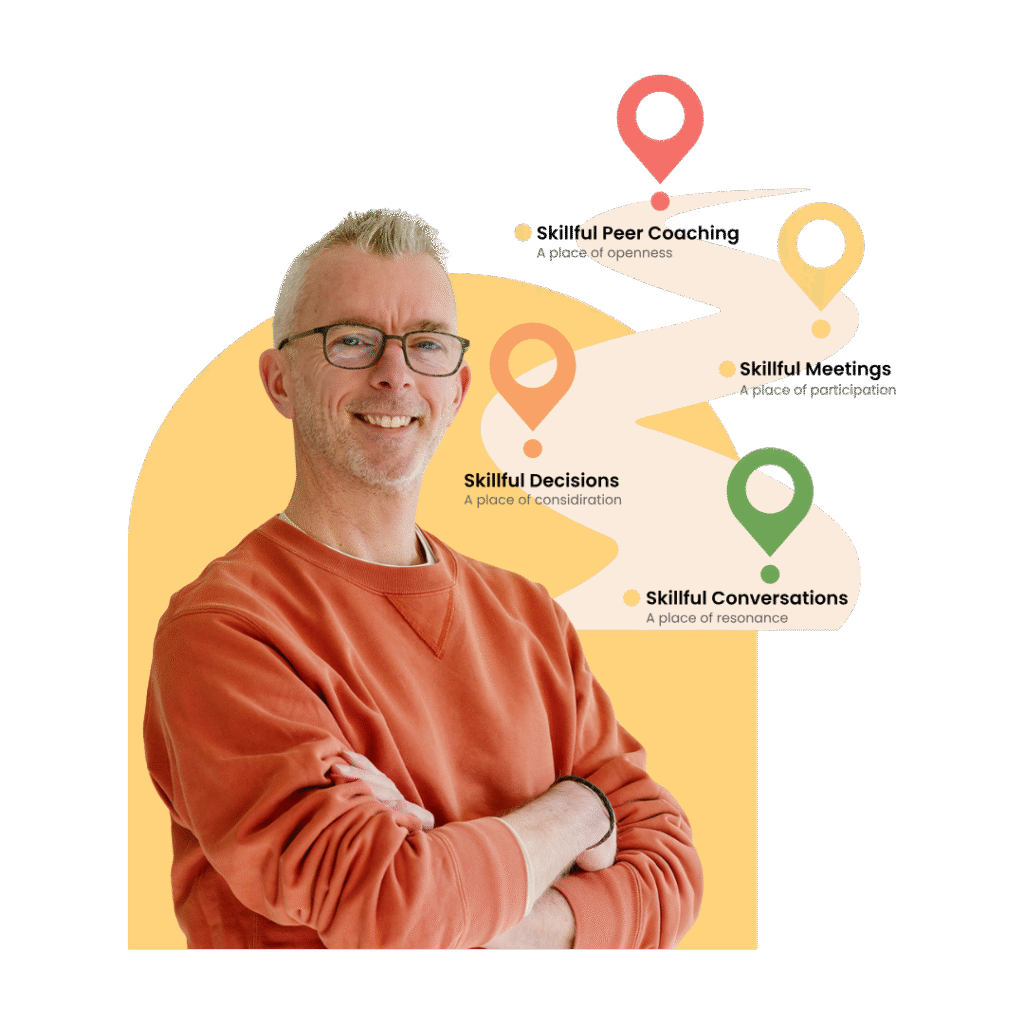
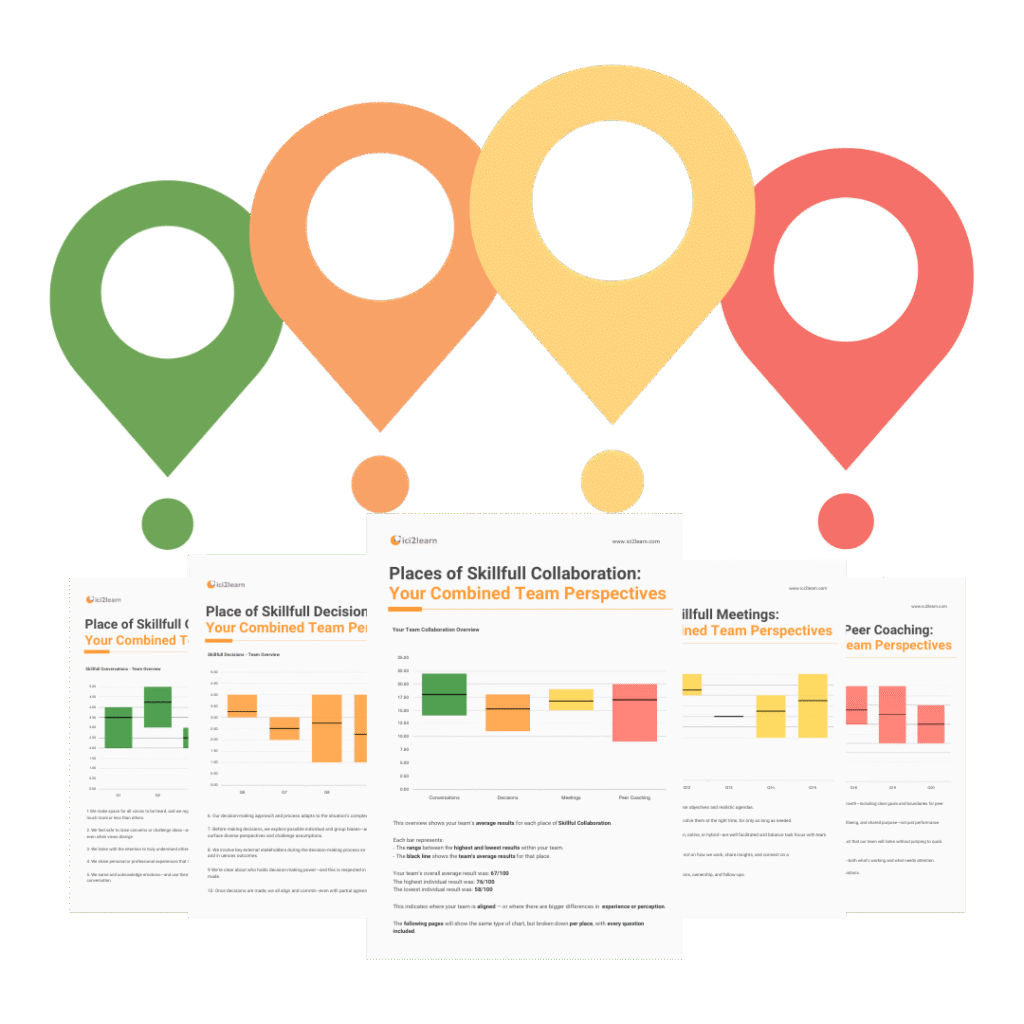
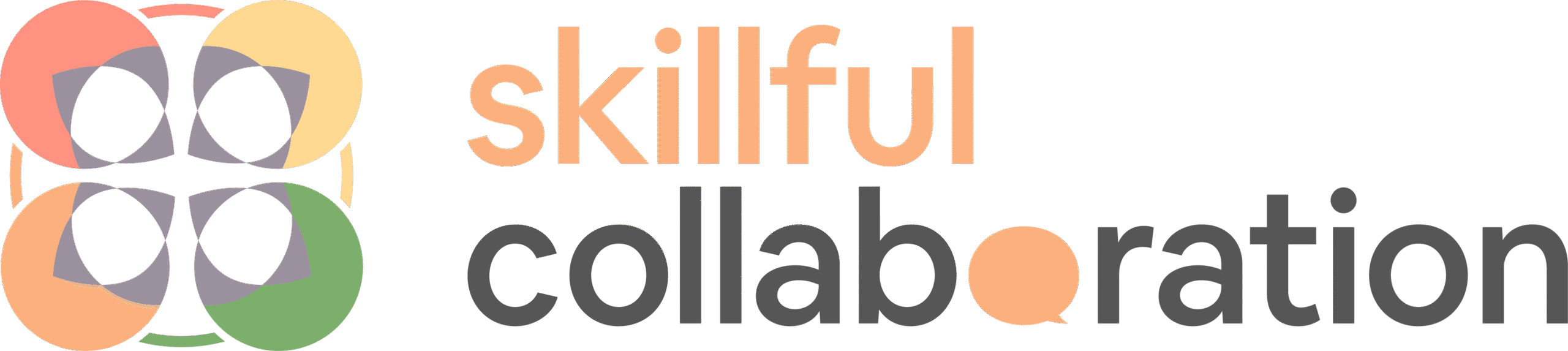
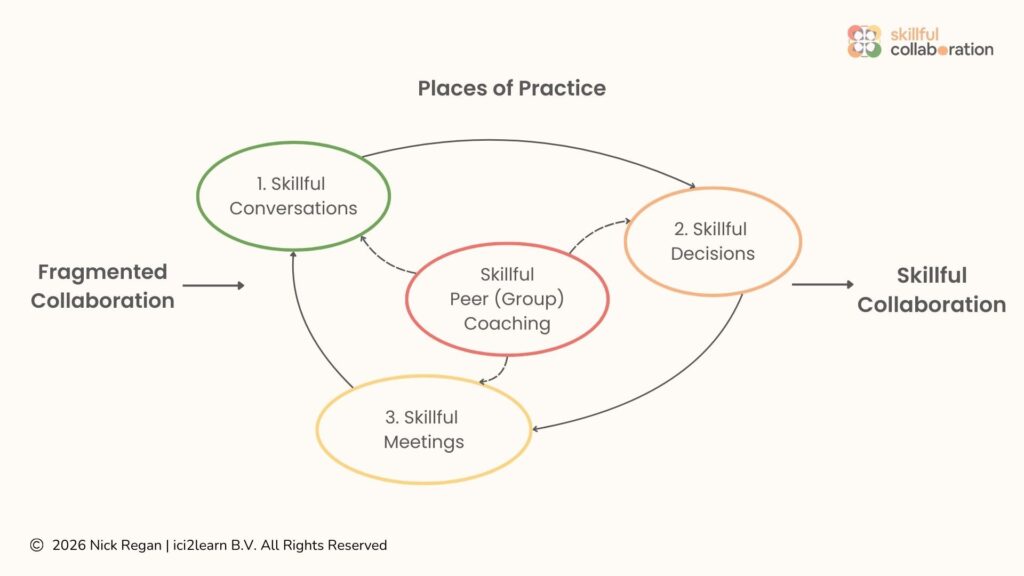
Here is an introduction to our Skillful Collaboration model:
In our organizations, we work together in and across teams through everyday human interactions.
The most frequent of these are our conversations. How many conversations do you have each day with colleagues? And just as importantly, would you say that the conversations you are involved in are skillful conversations?
A skillful conversation is one in which a pair, group, or team of people talk and think together with a clear intention. Participants skillfully shift between advocating their own perspectives and ideas and inquiring into others’ perspectives, so that together they can arrive at the best possible outcome.
Learning to have skillful conversations is the first place of practice for collaborating skillfully.
Furthermore, in our organizations, we actually create value when making decisions. In corporate and organizational contexts, many decisions are complex—often too complex for one individual to make alone. Better decisions are made by integrating multiple perspectives. However, if our teams do not know how to have skillful conversations, how can they possibly make skillful decisions?
Making skillful decisions is the second place of practice for skillful collaboration.
Skillful decision-making involves understanding the context of the decision, choosing the appropriate decision-making process, recognizing power dynamics and authority, and entering dialogue so that a well-considered decision can be made.
Imagine the value we could create if teams consistently made skillful decisions.
If we can practice skillful decision-making in our organizations, the next question is: where does this happen?
The answer is in our meetings. Imagine if we could create workplaces with skillful meetings.
Skillful meetings are the third place of practice for skillful collaboration. Imagine meetings where the most important decisions are made, where people understand the intention and their expected contribution for each agenda item, where skilled facilitation ensures a balanced share of voice, and where team members leave more energized than when they arrived.
Imagine our workplaces if teams practiced these three places of skillful collaboration: skillful conversations, skillful decisions, and skillful meetings.
Now imagine how teams could further grow and develop if, in each of these places, there was also room for skillful peer coaching—not only one-to-one peer coaching, but also peer group coaching.
Through peer coaching and peer group coaching, we can create spaces for mutual learning. This is different from a culture or place of ‘feedback,’ where one person may request a change in behavior from another. This is often met with a ‘closed’ response, and no meaningful change occurs. A peer-coaching stance allows observations to be made and invites inquiry into others’ perspectives on those observations. In this way, individuals and teams remain ‘open,’ and mutual learning and development emerge.
Through peer coaching, peer group coaching, and reflection during conversations, decision-making, and meetings, continuous improvement becomes possible—resulting in teams and individuals who practice skillful collaboration.
This is our model for helping teams grow the human skills of collaboration—and for shifting organizations from places where collaboration is habitual, automatic, and fragmented to places where it is learned, practiced, and continuously developed through everyday human interaction.
Finally, a special mention for teams.
This model is intentionally focused on teams, because we believe that teams—including their leaders—are the real drivers of value in our organizations. Teams work together every day, and it is in these everyday team interactions that collaboration either stays fragmented or becomes skillful.
When teams learn the skills of collaboration together, they can collectively commit to applying their learning in practice. They can hold each other accountable, notice when old habits resurface, and consciously choose more skillful ways of working together. This shared ownership is what makes change stick.
When teams learn together, there is a far greater chance that what they learn will be embedded in how they collaborate—day in, day out. Over time, these practices naturally spread across teams and, ultimately, across the organization.
Can you imagine workplaces where Skillful Collaboration is practiced each and every day in your team?
This is how places of skillful collaboration are developed—and how real, sustainable value is created.