
I’m 53 years old — and only truly learnt how to have a skillful conversation a couple of years ago.
I could talk from the age of 2. I was top of my class in most subjects at school. I went to university in the UK and France to study engineering, and even did a Master’s program at the University of Cambridge. I had a successful engineering career, developing projects for highly demanding customers and working in global engineering management teams. I moved into HR, set up European L&D functions, and led a Global Corporate Academy. For the past 7 years I’ve facilitated team development programs, worked as a leadership coach, and often trained leaders in leadership development.
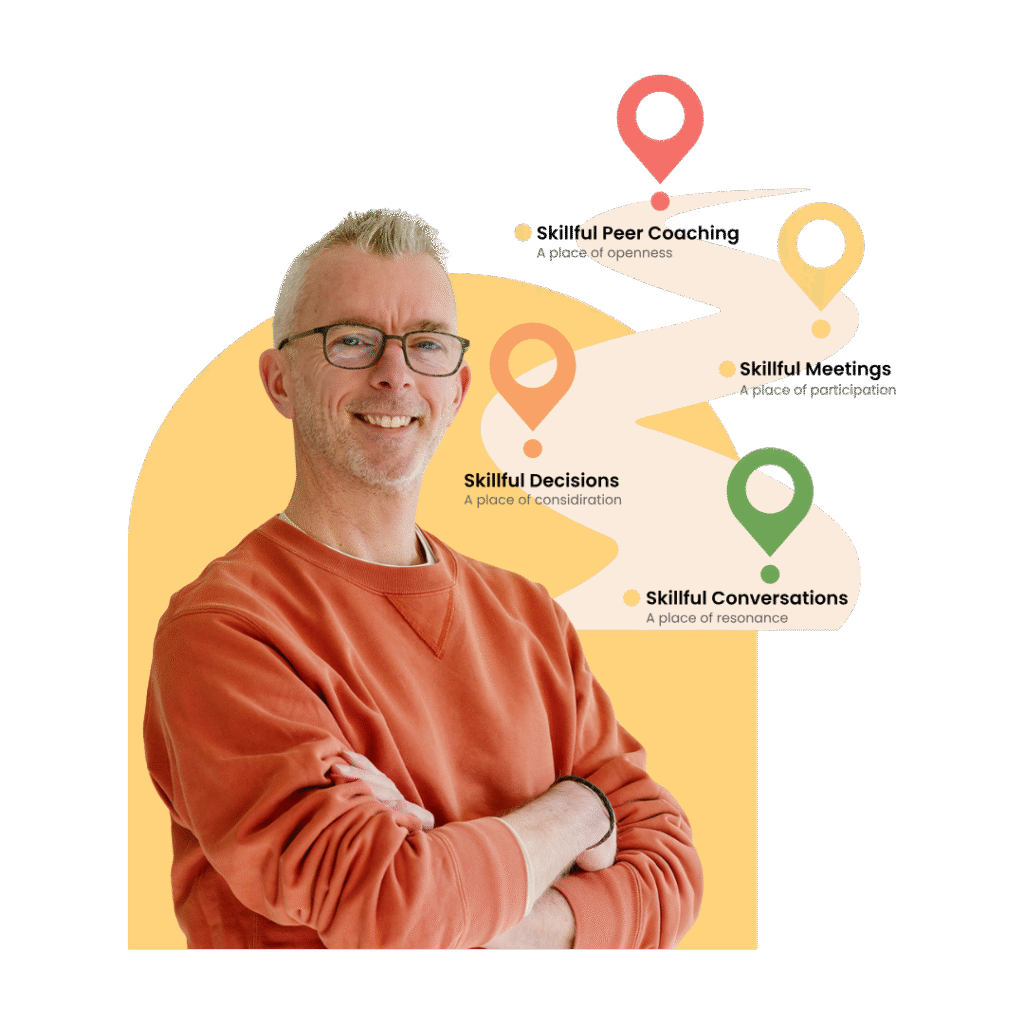
I’ve achieved and done quite a lot. But it’s only in the last couple of years that I fully understood — and more importantly, began to practice — the art of Skillful Conversations.
The concept
‘Skillful Conversation’ is a concept developed by Peter Garrett and Jane Ball of the Academy of Professional Dialogue Practitioners. They define it as a conversation where we reveal the thinking behind our words and actions to deepen understanding and enhance decision-making.
I’ve always considered myself open and curious. So when I heard about Skillful Conversations — as opposed to what Garrett and Ball call a “conversation” (simply turning over thoughts with one another) — I was intrigued.
The 4 Plays
In my work with teams over the past few years, I’ve often used the 4-Player Model developed by David Kantor. He observed four ways people talk together, first in family systems:
- Move: someone makes a suggestion or brings an idea.
- Follow: someone supports or agrees with it.
- Oppose: someone challenges or disagrees.
- Bystand: someone asks a question, offers extra information, or shares an observation.
Observing these 4 “plays” in team meetings creates a lot of awareness, especially in teams stuck in habitual dynamics. For example: “Here’s my idea (move).” → “I disagree (oppose).” → followed by all the reasons each idea is better. What often happens is a series of monologues — not a true conversation. Kantor’s model is a simple and powerful way to raise awareness, and I use it often.
The 4 Practices
Skillful Conversations go further. Garrett and Ball build on Kantor’s model with 4 Practices:
- Voice: speaking your ideas, emotions, intuitions, and thinking authentically.
- Respect: bringing an opposing point of view while staying open to thinking with the group.
- Listen: attending to both the content and the delivery — how it lands on you, the effect it has on you and the group.
- Suspend: resisting the rush to conclusion or decision, and considering different perspectives with an open mindset.
What I love is that the word skillful implies this is a learnable skill. And like any skill, it takes time and practice to become skillful at it.
P.s. It’s even a skill you can practice around the lunch table…. when someone isn’t taking a selfie. :-))
Why it matters
I’m 53, and now that I know the theory and practice the art of Skillful Conversations every day, I feel a strong need to bring this concept to others.
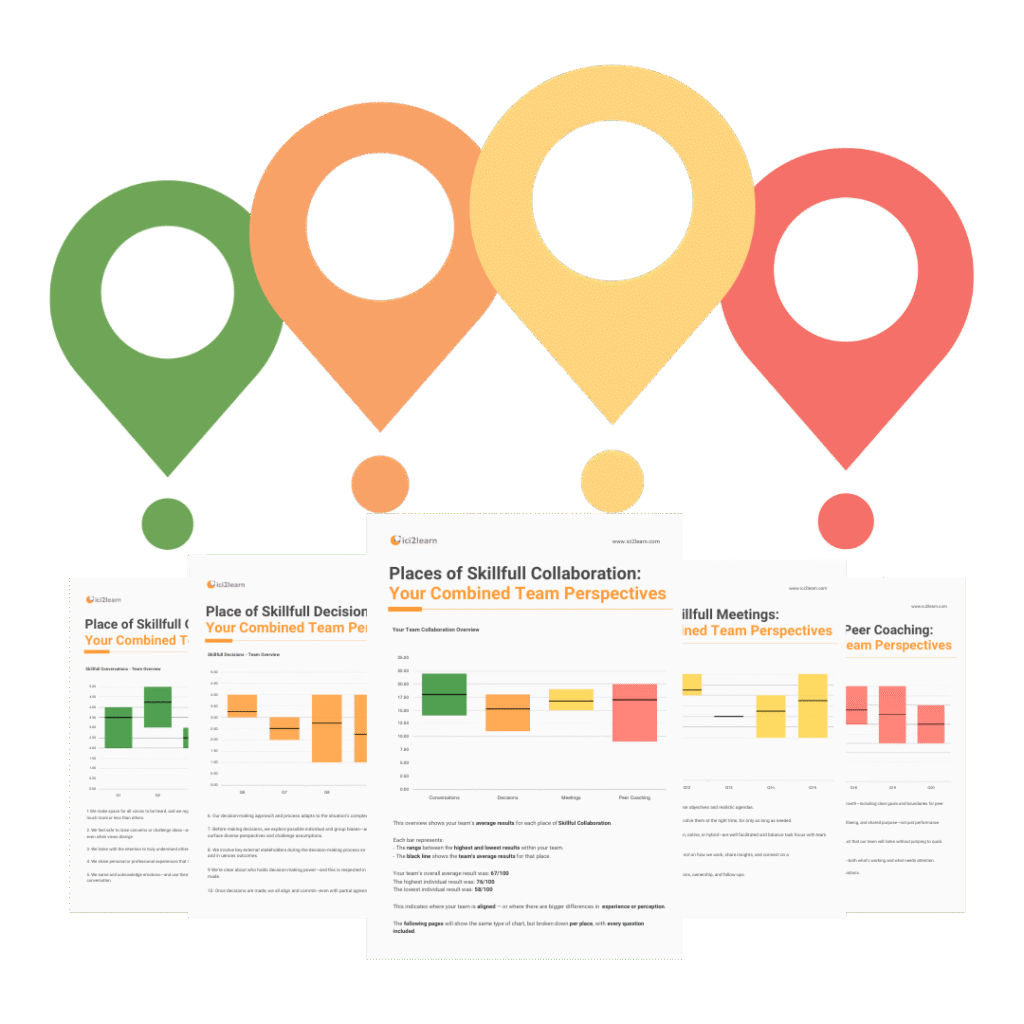
Do you have skillful conversations in your team?
I’ve worked in corporate for 30 years — and have rarely experienced one.
Imagine the difference it would make if more teams could have Skillful Conversations.