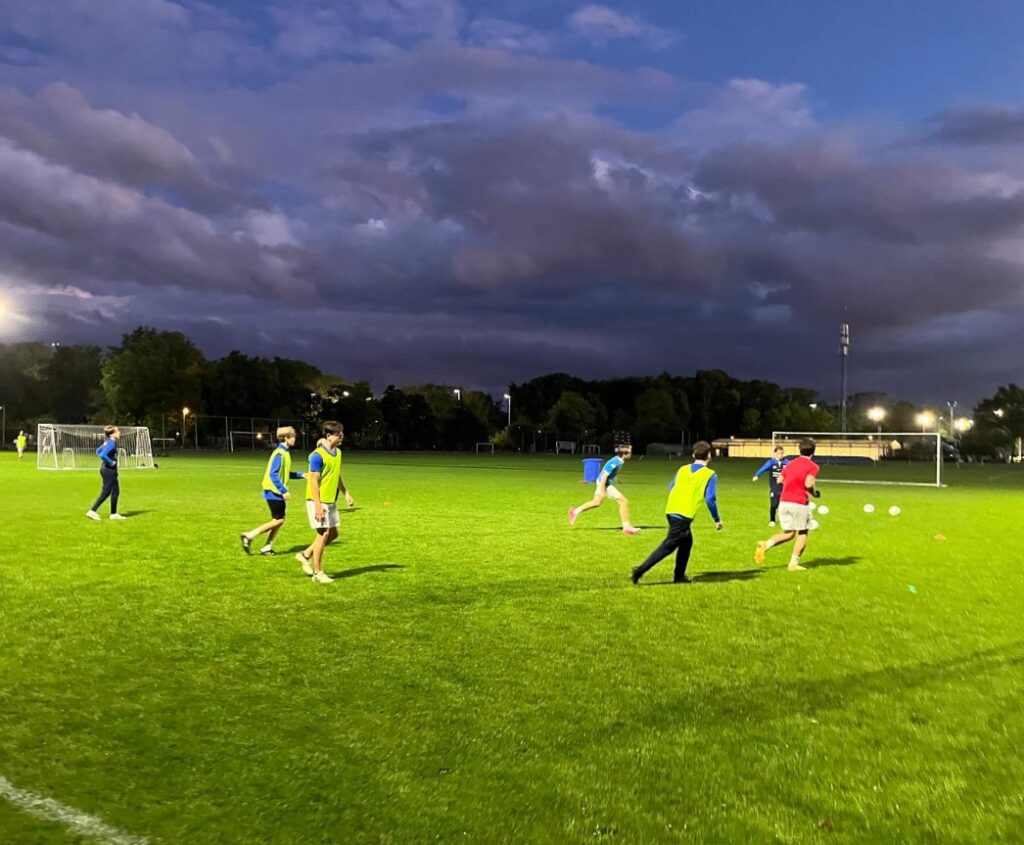
On Saturday I was coaching my son’s soccer team and getting more and more frustrated. Every time our keeper had the ball, he’d pass it out — and five seconds later, the opposition had it back.
This matters in soccer for two simple reasons:
- If we keep possession, we can score — and the opponent can’t.
- If they win the ball near our goal, they’ve got a great chance of scoring.
Possession is everything. And possession depends on skills. We lost 3–0, and the boys were just as frustrated as I was.
Frustration, though, can be useful. It can spark change.
At Monday’s training we worked on two drills:
- First, the basics — trapping, passing, moving in small groups. The boys struggled with it, but already came with ideas to change the drill to make it more competitive, and more difficult.
- Second, a half-field exercise where the keeper started play, and I positioned each of the 7 players in his team. He played the ball out and his team tried to keep possession and score in small goals at halfway; the other 7 players from our team pressed as the opposition.
The players made some progress, but soon they were asking: “Can we just play a game?”
And that made me smile. Because it’s exactly the same with the teams I coach at work. People often prefer to “just get on with it” rather than go back to basics, pause, slow down, and practice the skills that make collaboration possible.
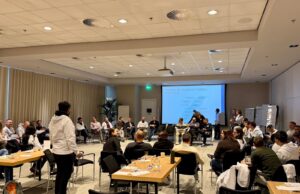
That morning, I’d been facilitating a session with a Quality and Process Engineering team. Over the last few months, we’ve been working on Team Effectiveness and especially on leveraging interdependencies. Historically they’d operated more as individuals than as a team.
A while ago I introduced them to David Kantor’s 4 Player Model — Move, Oppose, Follow, Bystand — as a way to notice and balance contributions in conversations. We practiced, and even created a list of expectations of me as their coach. That was their “first drill.”
Yesterday, when I brought the model back, a couple said: “Oh, we know that one already!” But when I asked about their actual patterns in conversation, they couldn’t name them. So we went back to practice: this time using their Advocating ‘Voice’ (a skillful “Move”) by finishing the sentence: “What I really appreciate about working with you is…”
Just like on the soccer field, in corporate teams we need to return to the basics — and keep practicing.
So here’s my question: Which skill would you love your team to practice, again and again, to strengthen the way you collaborate?