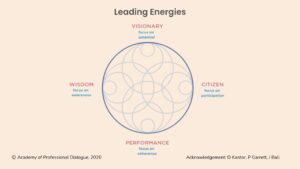

Many teams and organizations that we work with are very successful and highly focused on performance, tasks, and objectives — they deliver!
However, they can become so successful that they grow almost blind to the need to improve how they work together as a team, and to the importance of learning and developing as individuals.
As a result of this hyper-performance focus, team performance often stagnates. Teams take on more and more tasks; their ways of working become outdated, and team members become overly stressed, demotivated, disengaged — and eventually leave.
This over-focus on performance energy, tasks, and objectives is a serious problem. Of course, teams and organizations need to deliver in line with stakeholder expectations. But the relationship side of achieving those tasks is equally important.
If team members don’t connect human to human with their stakeholders, how can they truly understand their expectations?
And if team members don’t connect human to human with each other, they won’t understand each other’s perspectives, won’t leverage each other’s strengths, and will gradually — or quickly — become disengaged.
Balancing Performance and Relationship Energy
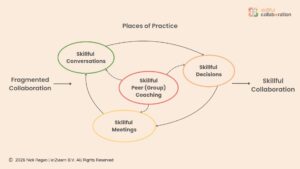
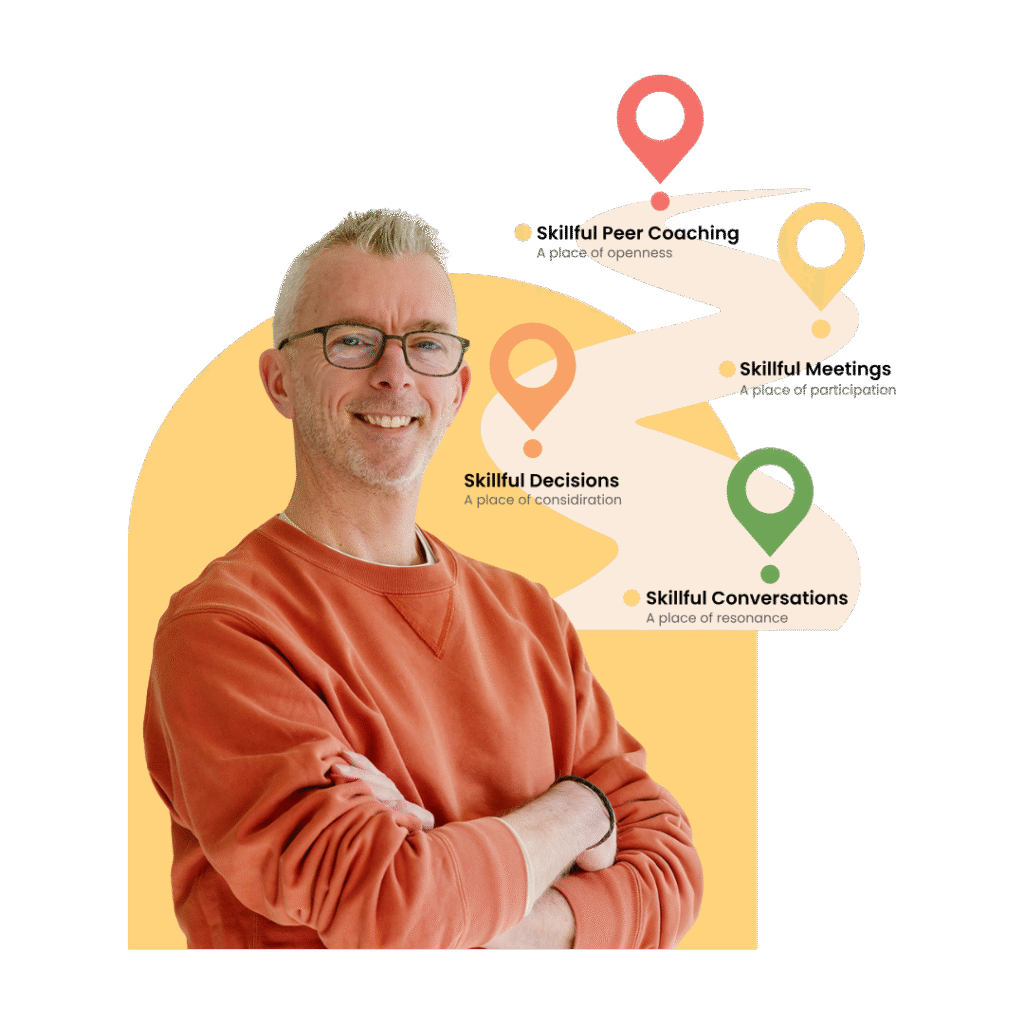
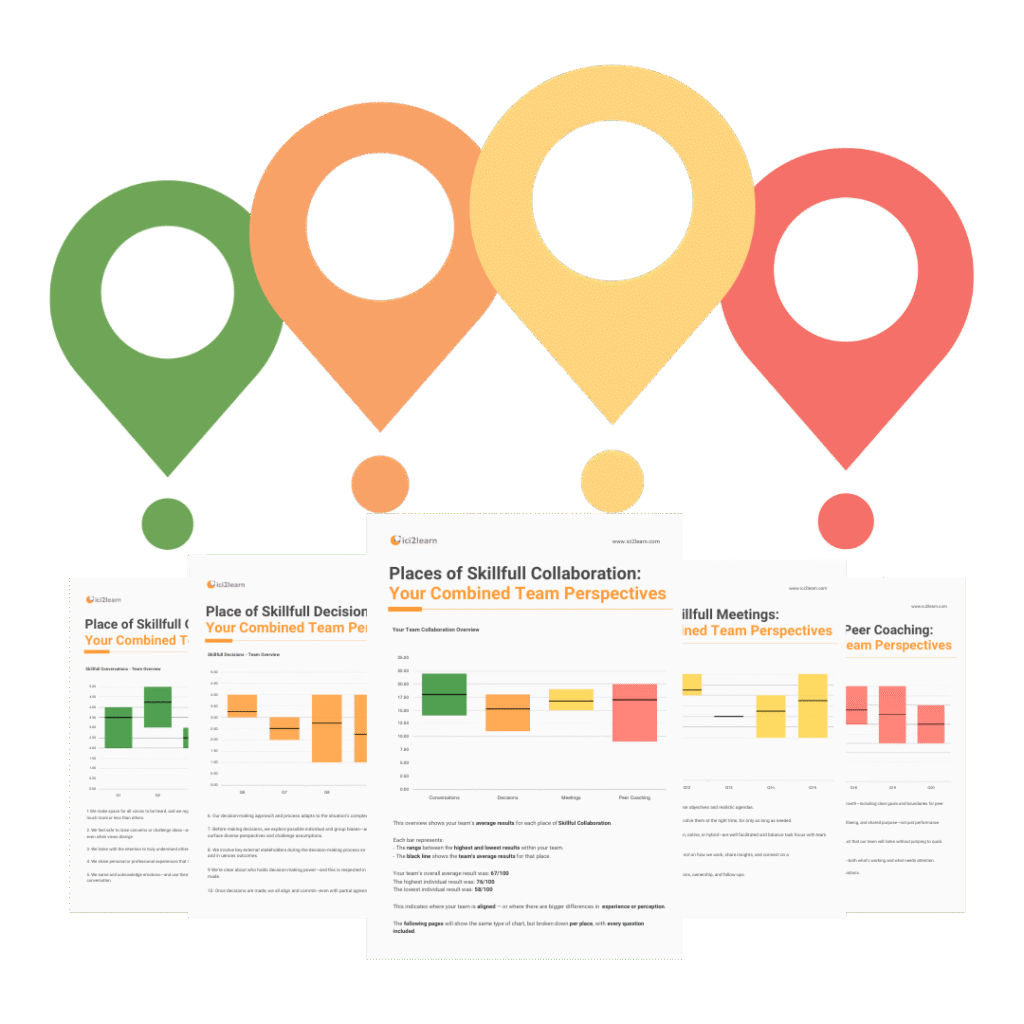
The Skillful Collaboration model is built around four places where teams practice the everyday human skills of collaboration: Skillful Conversations, Skillful Decisions, Skillful Meetings, and Skillful Peer Coaching.
At first glance, we might imagine that the skills practiced in Conversations and Peer Coaching are relationship-focused, while Decision Making and running effective Meetings are task- or performance-focused.
But this is certainly not the case.
As teams develop their conversational skills — for example, by learning to recognize team dynamics — those same dynamics often appear in how decisions are made.
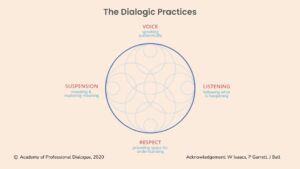
When a team tends to make decisions quickly, with input only from the most senior members, the conversational skill of bystanding — inviting input from other voices — can be transformative. Encouraging less senior members to share their ideas and questions not only enhances the quality of the team’s decisions but also strengthens trust and engagement across the group.
The same principle applies to team meetings. Many teams overload their agendas, leaving little time to reflect on how they actually work together. By using peer coaching skills, teams can learn to “get on the balcony” — to step back and observe their own interactions during a single agenda item.
This balcony view helps the team notice patterns in their collaboration and ask valuable questions such as: What did we all commit to, and by when?
These coaching reflections make expectations explicit rather than leaving them to individual interpretation — improving relationships through clarity and boosting performance through shared ownership and accountability.
Delivering on performance and strengthening relationships are both essential for effective teams. And helping teams everywhere grow the skills of collaboration — this is what we do… it’s our mission!
If you’d like to take the first step toward developing Skillful Collaboration with your team, why not try our free assessment?
Here’s the link.