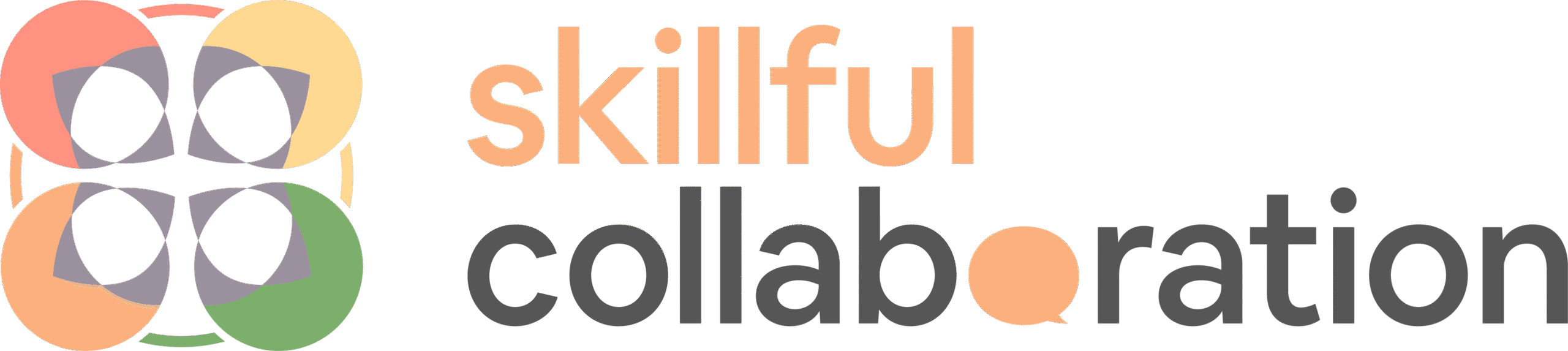
Our mission with Skillful Collaboration is ‘to help teams everywhere grow the human skills of collaboration.’
Seems simple, but let’s pick it apart.
We define Skillful as ‘the ability to do something well.’
And Collaboration simply means working together. It comes from the Latin words col, meaning together, and labore, meaning to work.
We define a skill as something that can be developed through intentional practice. And we believe that human skills are developed, not only in training rooms or team workshops, but through everyday human interactions.
Moving on to teams, it is teams, including their leaders, that create value and deliver performance and innovation in organizations. It is also in teams, and across teams, where the human skills of collaboration are most needed and where they can be practiced every day.
Teams that learn together, commit together and hold each other accountable to improve together.
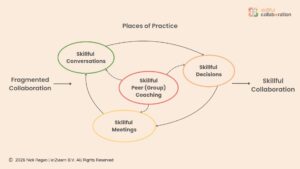
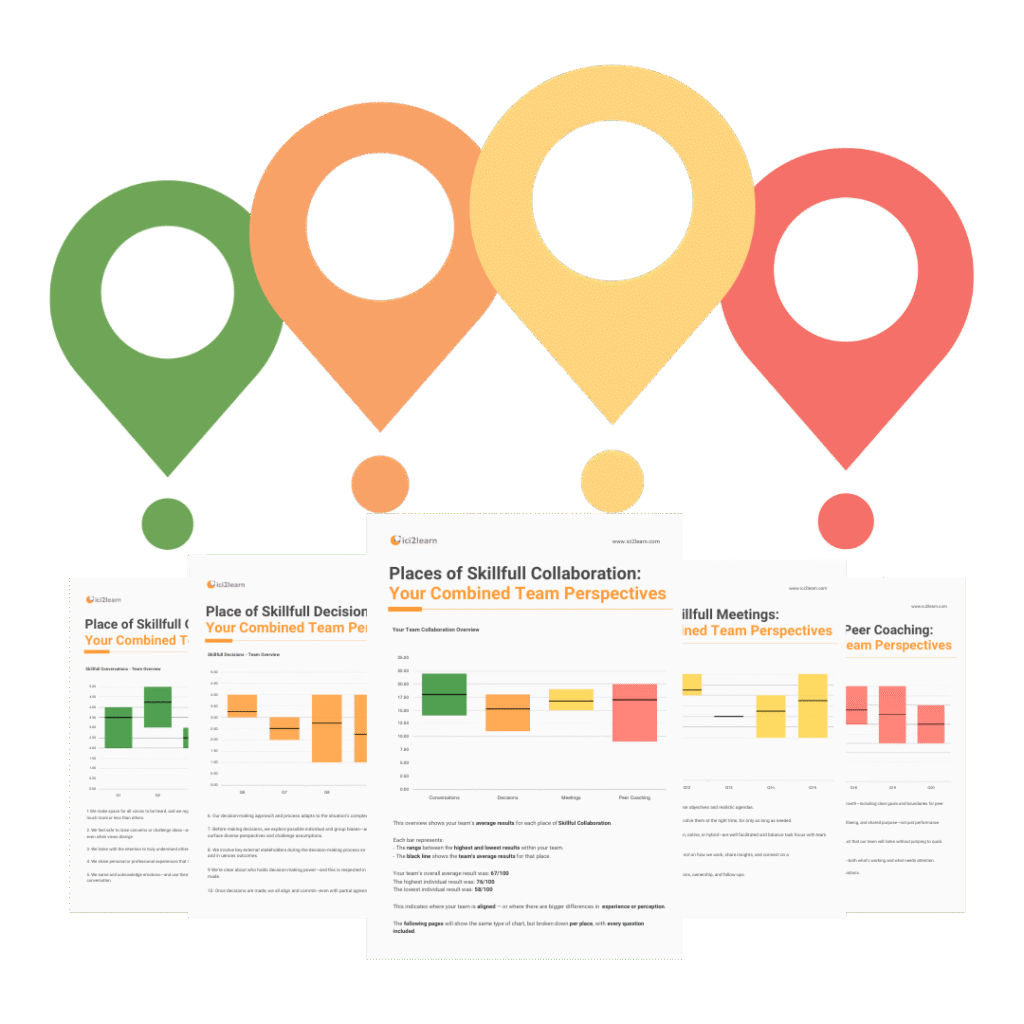
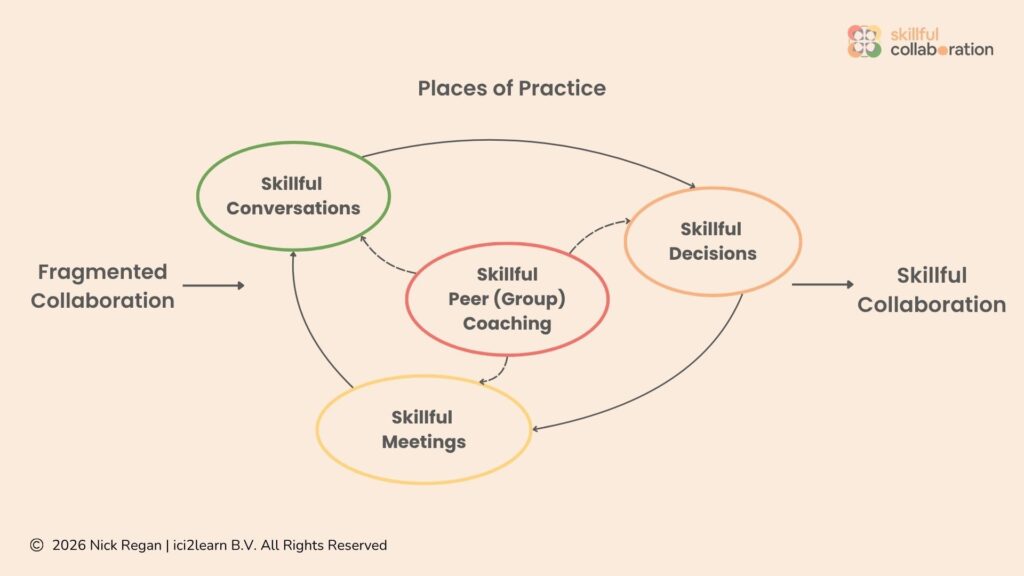
Our belief is that these human skills are developed through the everyday interaction and work of teams. They are practiced every day in conversations, when making decisions, in meetings and can continue to improve through peer coaching and peer group coaching.
So far so good… sounds coherent?
We’ve explained the Skillful Collaboration model to many organizations, coaches, facilitators and team coaches and usually receive a very positive reaction.
Followed shortly afterwards by some resistance…
“Our teams already know how to have conversations and make decisions.”
“Our team leaders already run effective meetings.”
“We’ve just rolled out a feedback programme so everyone knows how to give and receive feedback.”
And yet, I usually reply…
Do your teams have Skillful Conversations?
“What’s that?” usually comes the reply.
Do they consistently make Skillful Decisions?
“Possibly. Sometimes.. but we’re not really sure.”
Do your meetings create energy, ownership and better thinking?
“No… we’re usually rushing from one meeting to the next.”
Has your culture of feedback strengthened relationships, or has it sometimes created defensiveness?
“Well… feedback does need a certain level of maturity.”
And does your annual engagement survey continue to point towards improving collaboration across teams and functions?
“Absolutely. Cross-functional collaboration remains one of our biggest challenges.”
And that’s normally the point where curiosity appears.
“So… what’s actually underneath this model?”
“What are the human skills that our teams and leaders will actually learn?”
It’s a great question. And here’s the answer…
The foundation of the Skillful Collaboration model is ‘the art of Dialogue’.
Dialogue simply means ‘through words’. It comes from the Greek words dia, meaning through, and logos, meaning word or meaning. Today, I simply describe Dialogue as talking, listening and thinking together.
That sounds wonderfully simple, but anyone who has worked in organizations knows just how difficult it can be.
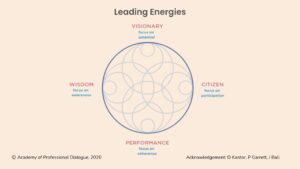
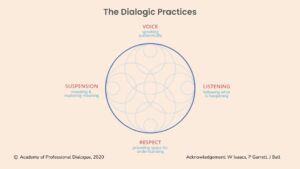
Over the past few years I’ve had the privilege of studying Dialogue through the Academy of Professional Dialogue. Their work, together with the pioneering work of David Bohm, David Kantor, Peter Garrett, Jane Ball, William Isaacs and many others, has profoundly influenced my understanding of how people and teams think together.
One of my reflections throughout this learning journey was that these ideas are incredibly powerful, yet they can sometimes feel difficult for leaders and teams to translate into their everyday organizational life. Team leaders don’t wake up wondering how they can practice Dialogic Actions or Dialogic Practices today. They wake up thinking about the conversations they need to have, the decisions they need to make, the meetings they need to facilitate and how they can help their teams work together more effectively.
That reflection became the starting point for developing Skillful Collaboration.
With the encouragement of the Academy of Professional Dialogue, I began developing a practical team development approach that places Dialogue into the everyday work of intact teams. Rather than teaching Dialogue as a stand-alone discipline, the intention was to create four everyday places where teams could experience it, practice it and gradually develop the human skills that sit beneath it.
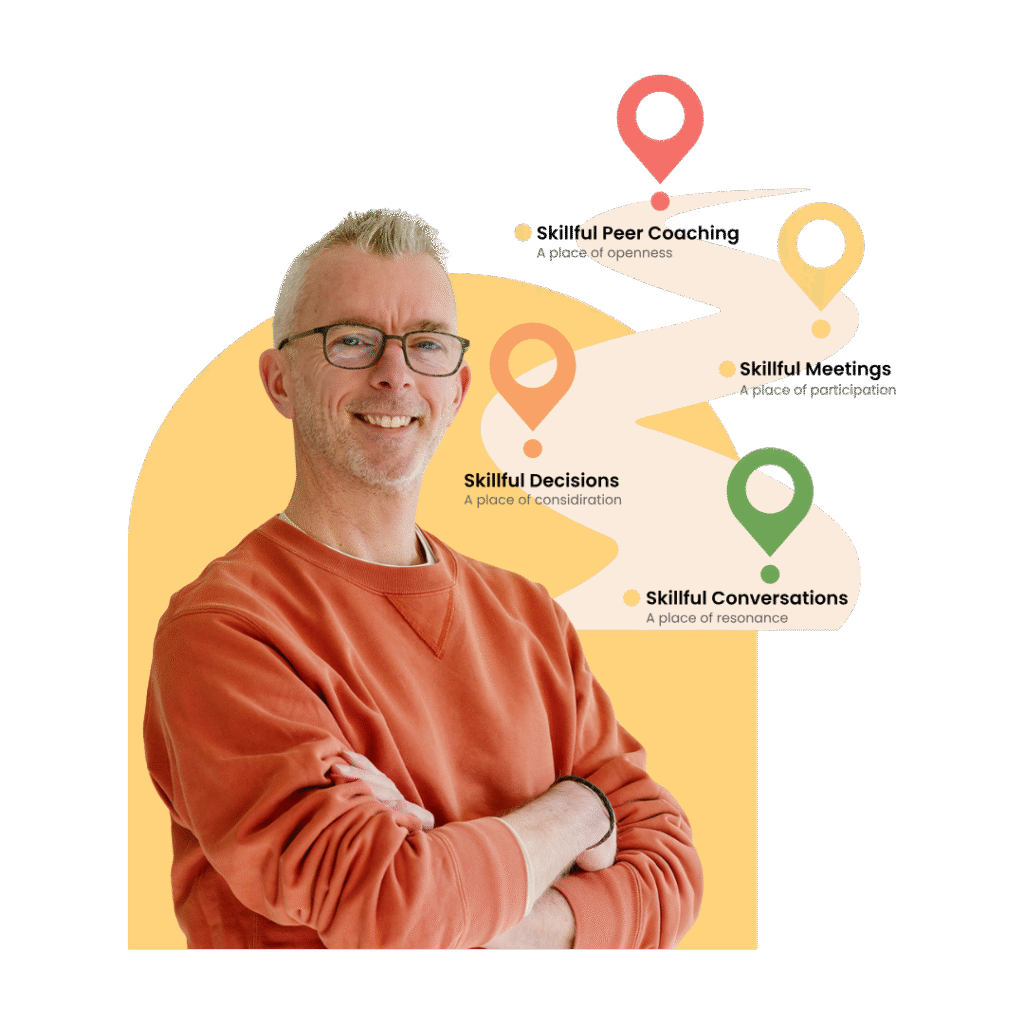
Those four places are Skillful Conversations, Skillful Decisions, Skillful Meetings and Skillful Peer Coaching.
In other words, I haven’t attempted to simplify Dialogue. My aim has been to make Dialogue more learnable, more practical and more applicable for teams working in today’s organizations, whilst staying true to the principles and practices developed by the Dialogue community.
But where do teams begin?
Like all learning, they begin with awareness. Awareness is the foundation of any meaningful change.
Over the next four posts this week, I’ll unpack how the principles and practices of Dialogue are intentionally woven into each of these four places of practice, beginning with Skillful Conversations.