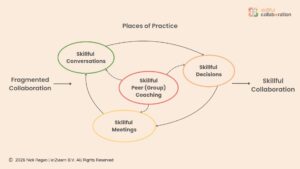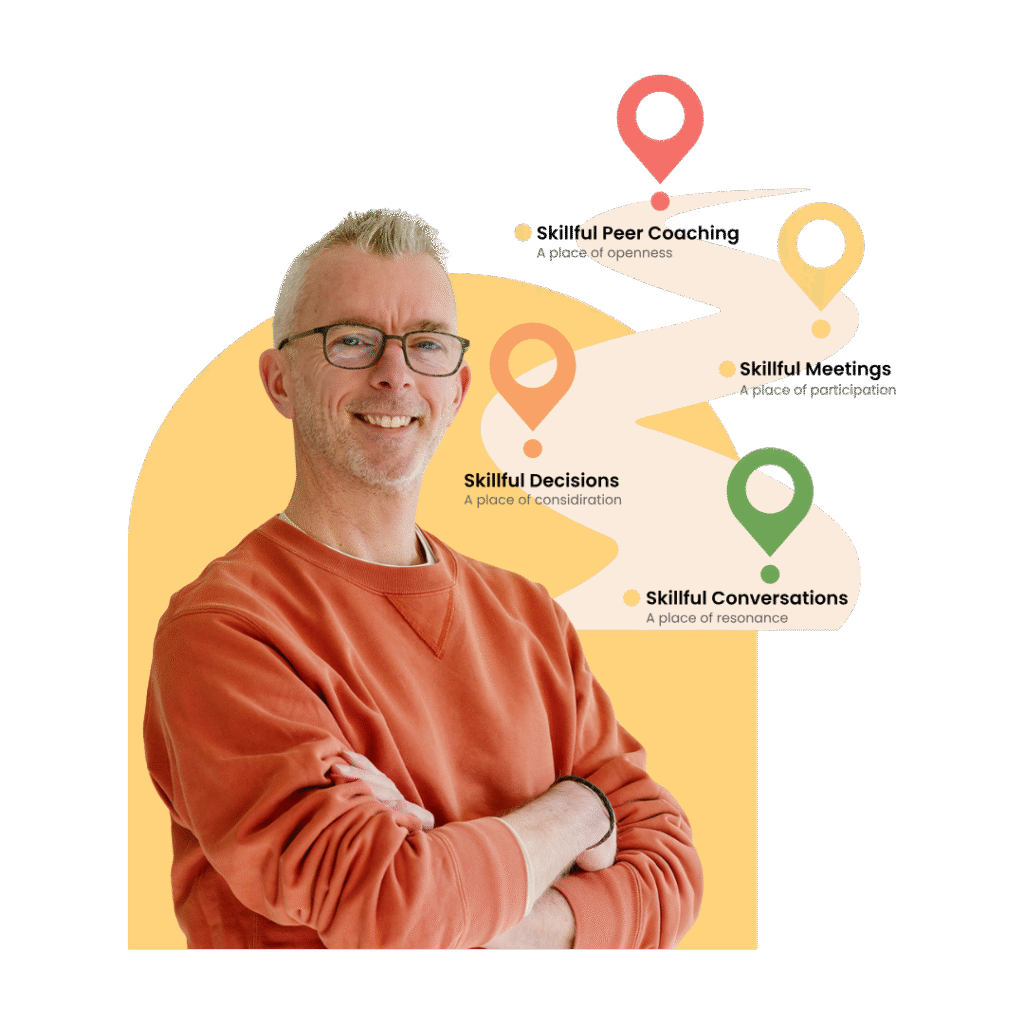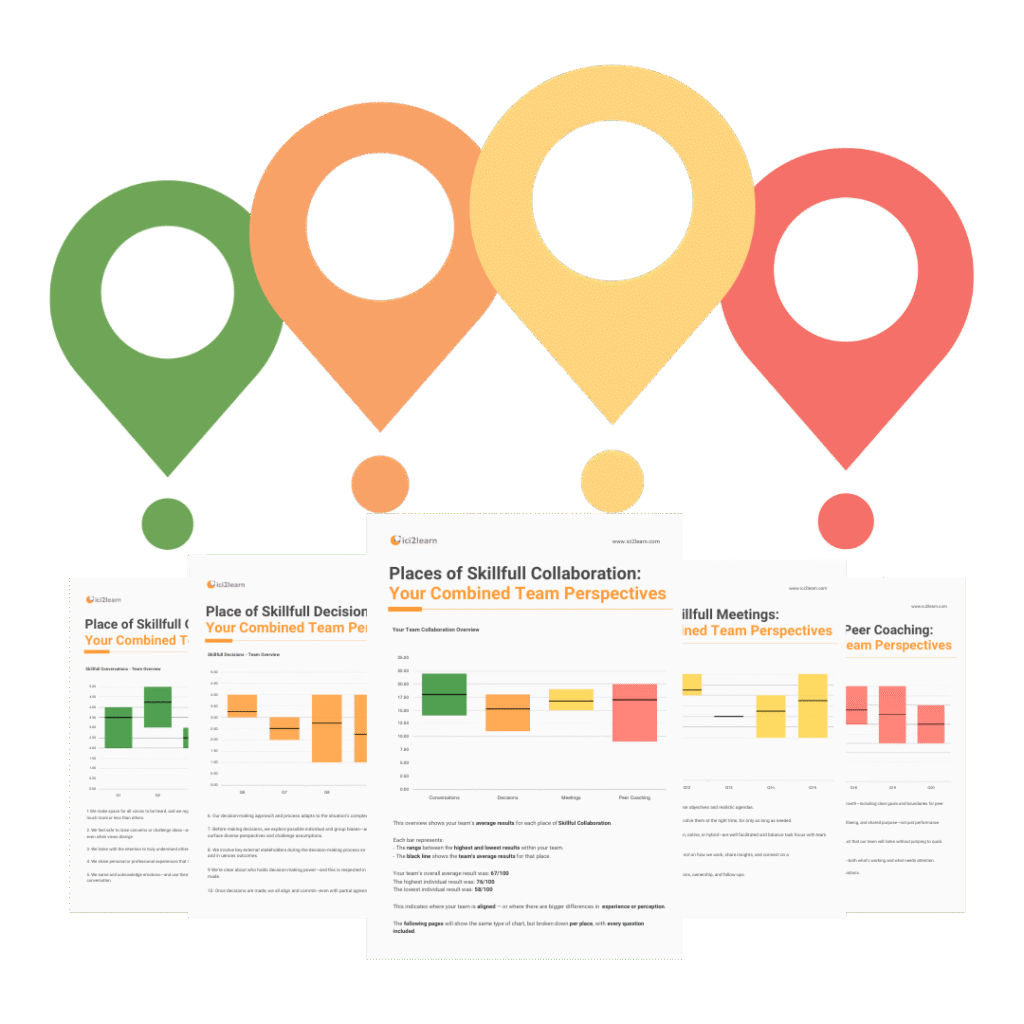
The 3rd step of the Skillful Collaboration approach is called Skillful Meetings.
By the time teams and their leaders reach this step, they have already experienced how developing their skills of ‘Dialogue’ improves the quality of their conversations and the collective ability to make rigorous and well considered decisions.
At this point the approach guides teams to the somewhat obvious realization that those conversations and decisions don’t happen in isolation, in our organizations they happen in meetings. Which naturally raises the question. If conversations and decisions can become more skillful, then can meetings become more skillful too?
When I ask teams and their leaders how much of their week is spent in meetings, the answer is usually somewhere between twenty and fifty percent of their time. Yet when I ask how many of those meetings genuinely create value for the team, the answer is usually ‘very few’.
Most teams and their leaders recognise that their meetings have become dominated by information sharing, status updates and reporting. Meetings typically have overloaded agendas, where few voices fill the space to push through their proposals and energy is generally depleted rather than generated. Many meetings are ‘completed’ in a rush in order to allow the participants to rush off to their next meeting.
The energy ‘lost’ in meetings is a serious issue for organizations. It’s leads not only to loss of effectiveness and productivity but also to frustration and disengagement.
So how can we create energizing meetings, rather than energy draining meetings?
To enable skillful meetings we first take a Design approach. Rather than beginning with agendas or actions, we begin by asking a different question. What is this purpose of the meeting?
Is it to inform? To make decisions? To work on a task together? To coordinate? To consult with each other? Or to strengthen the relationships within the team? Once teams become clearer about the real purpose of the meeting and each agenda item has a clear intention and is allocated relevant timing, then the design of the meeting begins to change.
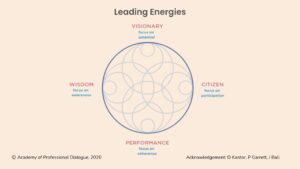
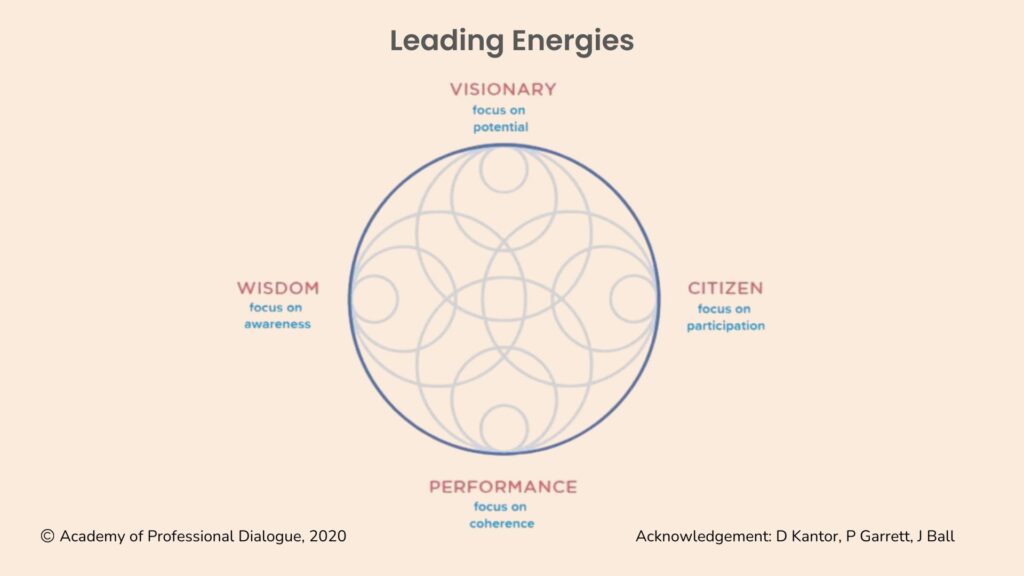
Aligned to the meeting ‘design’ from a Dialogic skills perspective we introduce teams to the Four Leading Energies.
Visionary Energy creates direction and possibility with a focus on potential.
Citizen Energy strengthens participation and shared ownership.
Performance Energy brings coherence and action.
Wisdom Energy guides the team towards awareness, through reflection, learning, curiosity and understanding each other.
Every meeting can contain these energies to some degree, but many teams acknowledge they spend most of their time in Performance Energy. The Leading Energies model doesn’t prescribe the right balance, it simply helps teams notice the balance they currently have and intentionally design and lean into something better.
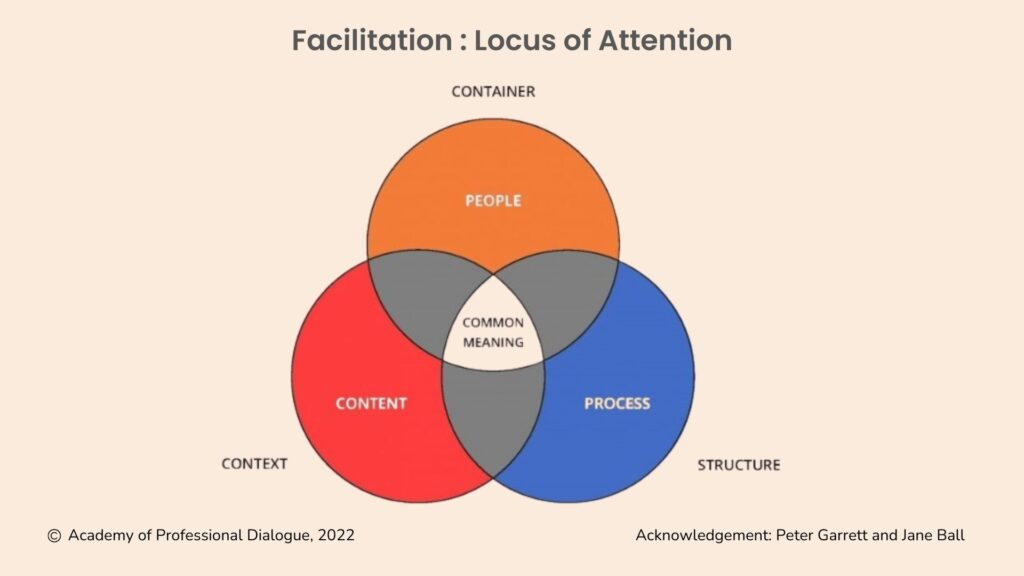
Alongside the ‘Design’ of meetings for purpose and energy, the other critical Dialogic skill needed for the Skillful Meetings is ‘Facilitation’.
Most meetings have several key roles e.g. chairperson / note taker / time keeper etc. For Skillful Meetings it is essential to understand who will be the assigned the role of Facilitator(s).
From a Dialogic perspective the Facilitator considers and guides the meeting by focusing not only on the content of the discussion, because it feels like the most important thing in the room. Dialogic Facilitation also requires attention to the people in the room and to the process that is unfolding between them. Is everyone participating? Are some voices missing? Has the team moved too quickly towards a solution? Is the process helping or hindering the quality of the thinking? Looking at meetings through these three lenses gives facilitators a much richer understanding of what is really happening and enables teams to find common meaning or voice, which creates energy!
As teams become more aware of these patterns of facilitation they also begin a feedback loop to redesign their meetings. Less time is spent reporting information that could have been read beforehand. More time is invested in thinking together, coordinating together and making decisions together.
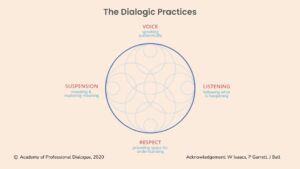
And as that happens, meetings gradually become another everyday place where teams practice the skills of Dialogue.