Helping a Global Expert Team Move Beyond Consensus
Why this Matters
Key insight from a participant:
“We realised that in trying not to be perceived as negative, we had become reluctant to say ‘No’ at all.”
The team’s challenge was not a lack of expertise or commitment. The challenge was learning how to lean into cross team tensions with more conviction and curiosity within a culture that naturally valued harmony and consensus.
Challenge:
Following a recent cross-company employee engagement survey, a global expert team within a large healthcare company received ‘OK/Good’ scores for delivering results. However, they wanted to further improve their performance by strengthening the team’s feedback culture.
As team members worked quite independently on a day-to-day basis, they also wanted to strengthen their interpersonal connections.
During interviews with several of the senior members it was agreed that learning different ways of talking and thinking together followed by practicing some peer coaching as well as feedback sessions would lead to more connection and curiosity between the team members, rather than focusing only on learning and practicing a typical feedback model.
Approach
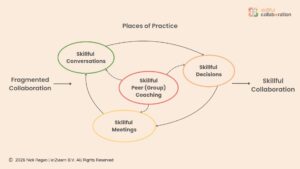
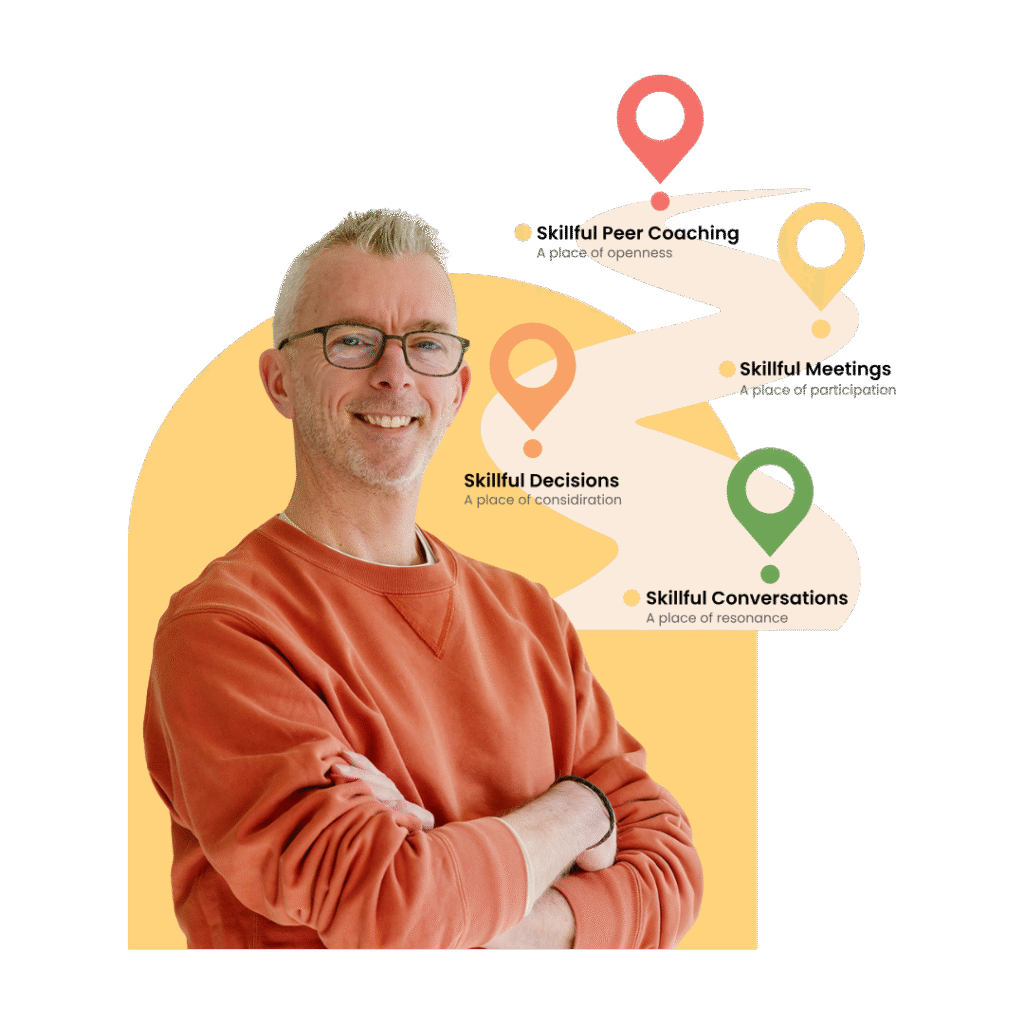
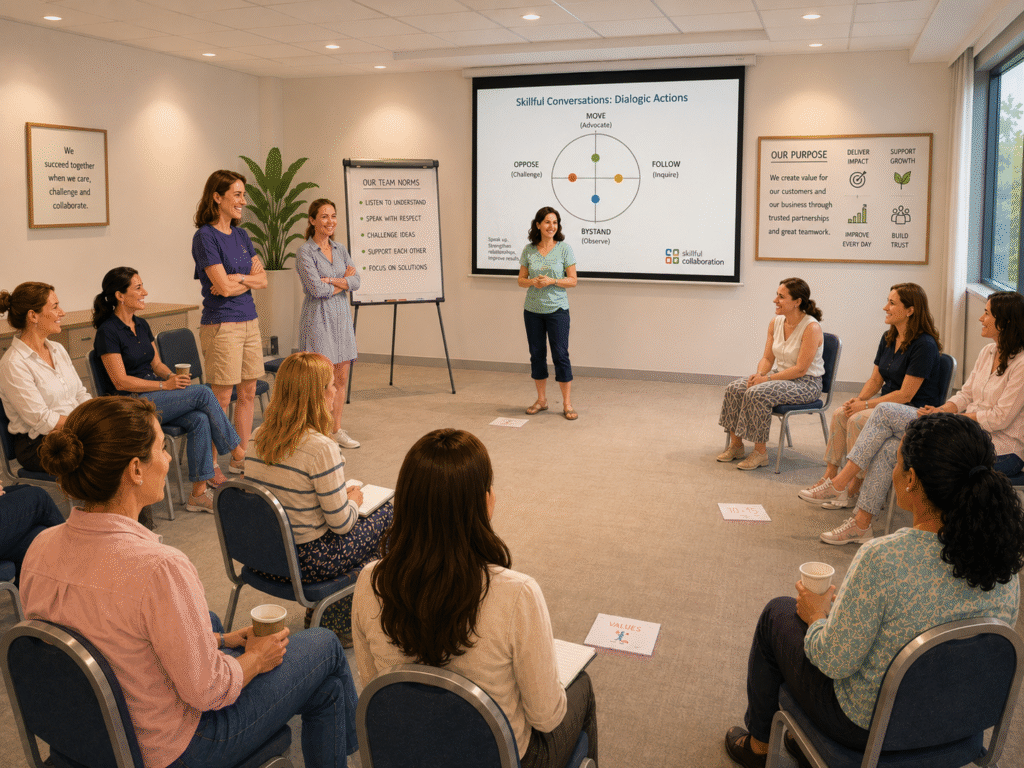
In a half-day team session, we selected learning content from the Skillful Conversations and Skillful Peer Coaching modules of the Skillful Collaboration learning approach.
The first half of the session focused on helping the team experience five of the Seven Modes of Talking and Thinking (acknowledged to W. Isaacs, P. Garrett and J. Ball). Through a series of interactive exercises involving monologue, debate, discussion, conversation and Skillful Conversations, team members explored different ways of engaging with one another and became more aware of their habitual communication patterns.
Two activities proved particularly powerful. The first was a debate exercise, where initially nobody wanted to debate, until we introduced the motion: “This house believes there should never be conflict in teams.”
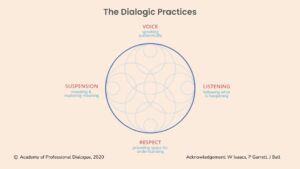
And the second involved the Dialogic Actions model (Move, Follow, Oppose, Bystand). As a subgroup of the team discussed possible fun locations for a future offsite, it became apparent that team members were comfortable advocating ideas and asking questions, but reluctant to openly disagree or say “No”. At the end of the exercise, the subgroup chose not to make a decision and instead created a poll to gather everyone’s input.
During the second half of the session, we explored the difference between Giving Feedback and Peer Coaching. Through powerful questions and a values-based Peer Coaching exercise, team members experienced the difference between advocating solutions and creating space for inquiry, reflection and learning.
Reflections
The workshop highlighted a strong tendency within the team towards harmony and consensus. Through the debate and Skillful Conversations exercises, team members experienced that disagreement does not automatically damage relationships. Instead, constructive challenge can strengthen understanding, decision-making and collaboration.
One senior team member reflected that earlier feedback about saying “No” too often may have contributed to the team becoming overly cautious about expressing disagreement. This insight helped the team recognise the importance of becoming more intentional about when and how to challenge ideas and perspectives.
The Peer Coaching activities also created a noticeable shift. Team members experienced the difference between feedback and inquiry-based coaching, while developing deeper connections through conversations about their values and motivations.
Outcomes
The team left the workshop with a shared language for recognising different modes of talk and choosing more intentionally how to engage with one another and their stakeholders depending on the situation.
They agreed to practice more debate and more skillful conversations, with a particular focus on how and when to say “No”. The team members acknowledged that developing this capability would require significant and deliberate practice back in the workplace.
They also agreed to support each other’s growth through greater inquiry and the use of powerful questions, as well as with providing feedback to each other.
Through developing greater comfort with constructive challenge, inquiry and peer coaching, the team identified opportunities to improve both collaboration and decision-making inside the team and across other stakeholders / teams.
What made the difference?
Rather than teaching a feedback model, the session focused on helping team members experience, reflect on and practice different ways of talking and thinking together. By moving between debate, discussion, conversation and skillful conversations the team became more aware of their habitual patterns and more intentional about how they collaborate during their everyday interactions.
By experiencing peer coaching in pairs, they created greater openness and depth in their connections while also experiencing the power of inquiry as a tool for mutual learning and growth.
This case illustrates a core principle of Skillful Collaboration: teams become more effective not simply by learning new models, but by becoming more intentional about how they talk, think and learn together.
Testimonials
- We truly appreciated the thoughtful structure you designed for the session.
- We very much valued your inclusive approach and the space you created for everyone to share their perspectives, which was particularly important given the group’s diversity.
- Many thanks again for your energy and the positive atmosphere you brought to the day.
- You created a very engaging and insightful experience for the team, and the way you guided us through these activities made the day both practical and enjoyable.