Helping Leaders Shift from Individual Performance to Team Performance
Why this Matters
Key insight from a participant:
“I realise I can’t do this all by myself. I need to trust my team more.”
Many leadership development programmes focus primarily on the individual leader. Yet organisations rarely succeed because of individual leaders alone. Performance and innovation are delivered through teams. The role of a leader is not simply to achieve results personally, but to create the conditions and connections in which their team can thrive, collaborate and perform at its best.
Challenge
A group of new and emerging team leaders from across a multinational organisation were invited to a leadership development programme focused on strengthening their leadership capability and better understanding how to lead both operationally and strategically.
Like many leaders, they were balancing day-to-day operational demands while also trying to develop people, improve collaboration, make effective decisions and deliver long-term value through their teams.
The challenge was not simply becoming better leaders as individuals. The programme challenged participants to shift their attention from managing tasks to creating the conditions in which teams can deliver value, innovation and performance.
Approach
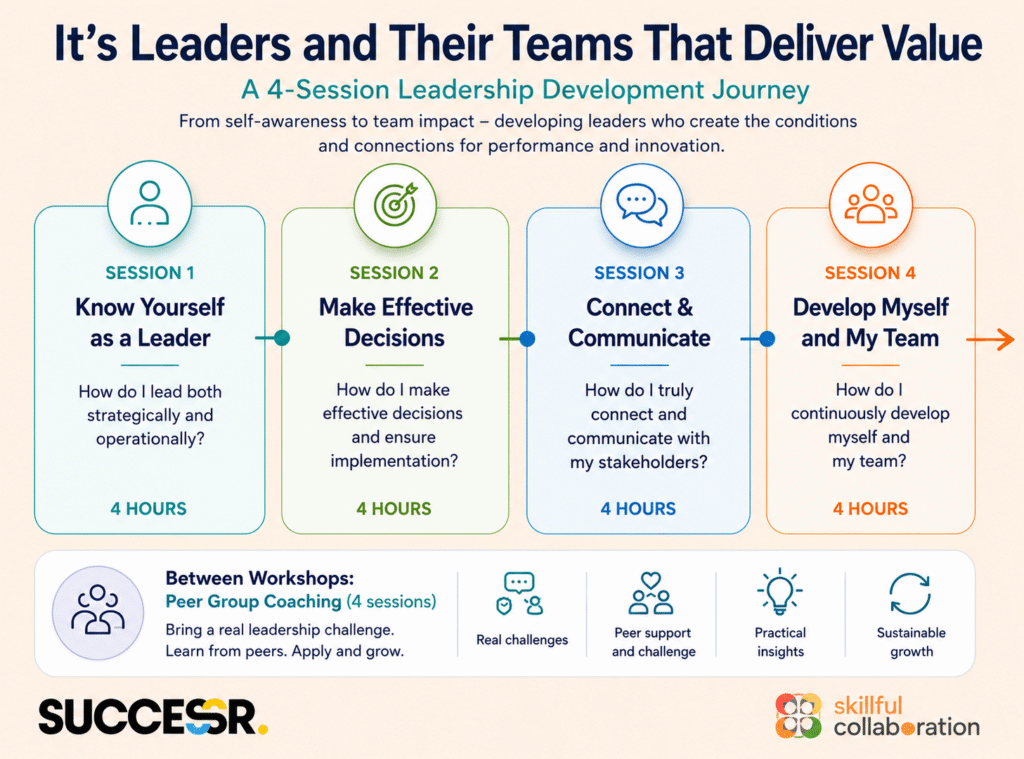
Over a series of online leadership development workshops spread across six months, participants explored leadership from multiple perspectives: self-awareness, emotional intelligence, values, decision-making, stakeholder relationships, team effectiveness, collaboration and peer coaching.
The programme began with a focus on the individual leader. Participants explored questions such as:
- Who am I as a leader?
- How do my values influence my choices?
- How do emotions influence my leadership?
- How do I show up in difficult situations?
Through Emotional Intelligence and Emotional Agility exercises, leaders reflected on how their emotions shaped their decisions, relationships and leadership effectiveness. They explored the importance of self-awareness, vulnerability and emotional courage in leadership.
As the programme progressed, attention shifted from the individual leader towards the team.
Using the 6 Team Conditions framework, leaders developed Compelling Purpose statements for their teams and explored a fundamental question:
“Why does my team exist?”
The conversations challenged leaders to think beyond tasks and processes and focus on the value their teams create for customers, stakeholders and the wider organisation. The leaders also explored the stakeholders who depend on their teams and the value those stakeholders expect them to create.
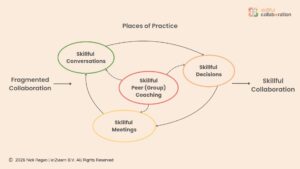
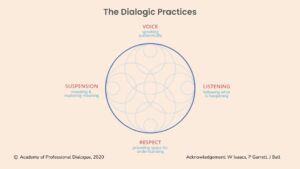
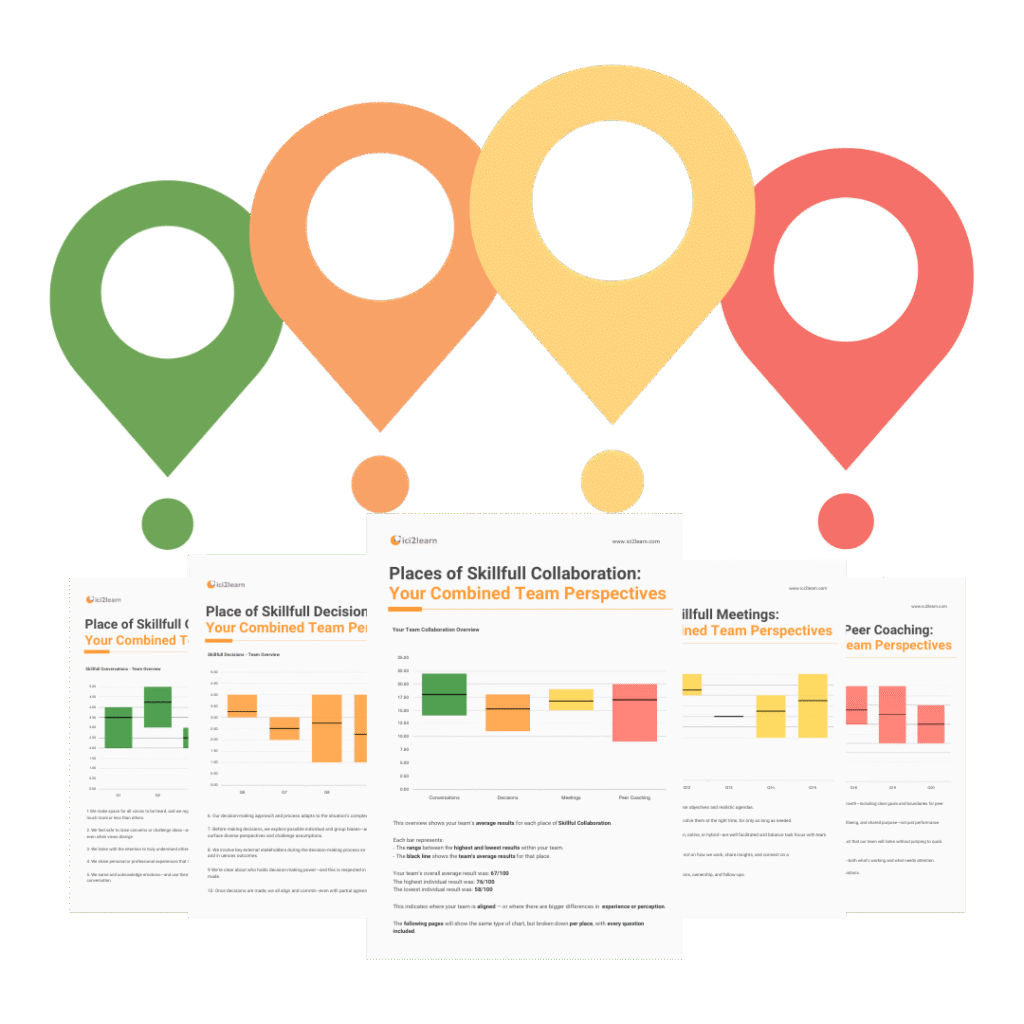
The group also explored Skillful Collaboration, including team dynamics, decision-making, stakeholder relationships, meeting effectiveness and Skillful Conversations. Through practical exercises involving the 7 Modes of Talking and Thinking Together and Dialogic Actions, participants experienced how the quality of conversations directly influences the quality of decisions, relationships and team performance.
Between the workshops, leaders participated in four Peer Group Coaching sessions. Each leader brought a live leadership challenge and was supported by their peers through a structured group coaching process. This created opportunities to apply the learning to real situations while learning from the experiences and perspectives of others.
Reflections
One of the most important shifts during the programme was moving from a leader-centric view of leadership towards a team-centric view. Participants recognised that leadership is not primarily about having the right answers. It is about creating the conditions in which others can contribute, learn, collaborate and perform.
The Peer Group Coaching sessions reinforced this shift by helping leaders move from solving problems alone towards drawing on the collective wisdom, challenge and support of the group.
Leaders reflected on the importance of feedback, autonomy, role clarity, effective meetings and stronger team norms. Others recognised opportunities to spend more time coaching, listening and supporting team members rather than solving problems on their behalf.
Perhaps most importantly, participants began to see their teams not simply as groups of people performing tasks, but as systems capable of creating value and innovation when given the right conditions.
Outcomes
Leaders left the programme with greater self-awareness, a deeper understanding of their values and increased confidence in applying Emotional Intelligence in their day-to-day leadership.
They also developed practical approaches for improving feedback, clarifying roles, strengthening team norms, involving employees in decision-making and creating greater ownership within their teams.
Many participants identified specific actions they wanted to implement, including creating more structured feedback conversations, increasing autonomy, improving stakeholder engagement and adopting a more coaching-oriented leadership approach. The Peer Group Coaching sessions also created an ongoing support network that helped leaders apply the learning to real workplace challenges.
Most importantly, the programme helped leaders connect their own development to the development of their teams and recognise that sustainable organisational performance is created through collective rather than individual success.
What Made the Difference?
Rather than treating leadership as a set of individual competencies, the programme explored leadership as a relational and team-based practice.
By combining self-awareness, Emotional Intelligence, team effectiveness, stakeholder thinking, Skillful Collaboration and Peer Coaching, leaders were able to connect personal leadership development with the practical reality of leading teams.
This case illustrates a core principle of Skillful Collaboration:
Organisations create value through teams. Great leaders create the conditions and connections in which those teams can succeed.
Testimonials:
HR feedback: Thank you! Next year, we will double the number of participants on the program.
Particpant feedback: I have so much more awareness now of my leadership skills and I’m starting to practice these skills with my team and stakeholders.